

The good news?
You can fix many of these today without spending any money.
This guide combines the most-searched questions online (like “What wastes the most electricity?”, “How can I save 90% of my electricity bill?”, “Does unplugging save electricity?”) with practical, science-backed solutions you can apply instantly.
If your goal is to reduce your power bill this month, this is the most complete guide you’ll read.
Every small change counts! Explore our expert-curated list of practical strategies that can transform your energy habits without breaking the bank. It’s never been easier to make a significant impact on your electricity bill and the environment.
Use a plug-in energy usage monitor to track each appliance in real-time.
You’ll be surprised — things like routers, set-top boxes, gaming consoles, and microwaves often run 24/7.
This device helps you identify which appliances waste the most electricity — often surprising ones like routers, set-top boxes, or gaming consoles.

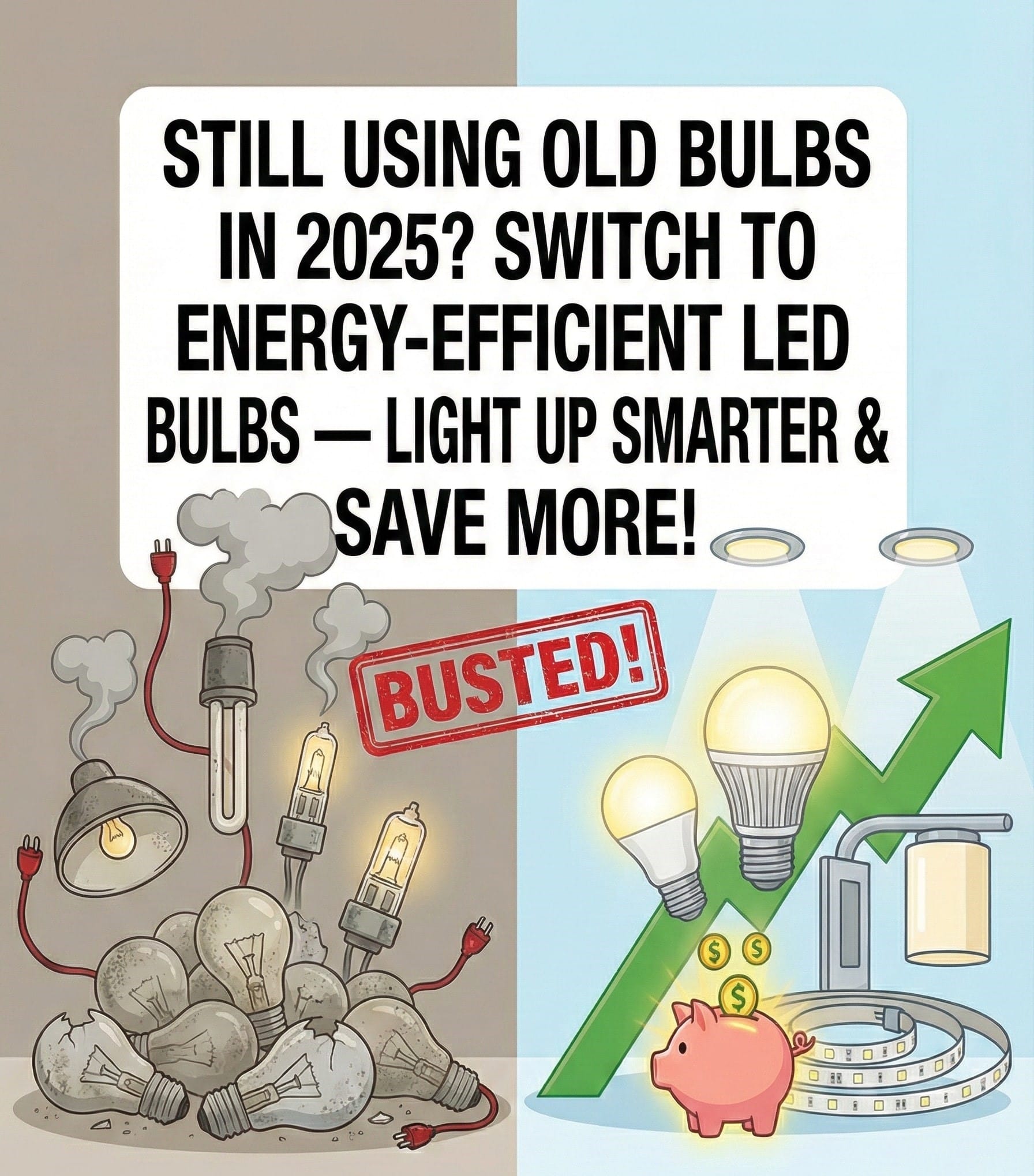
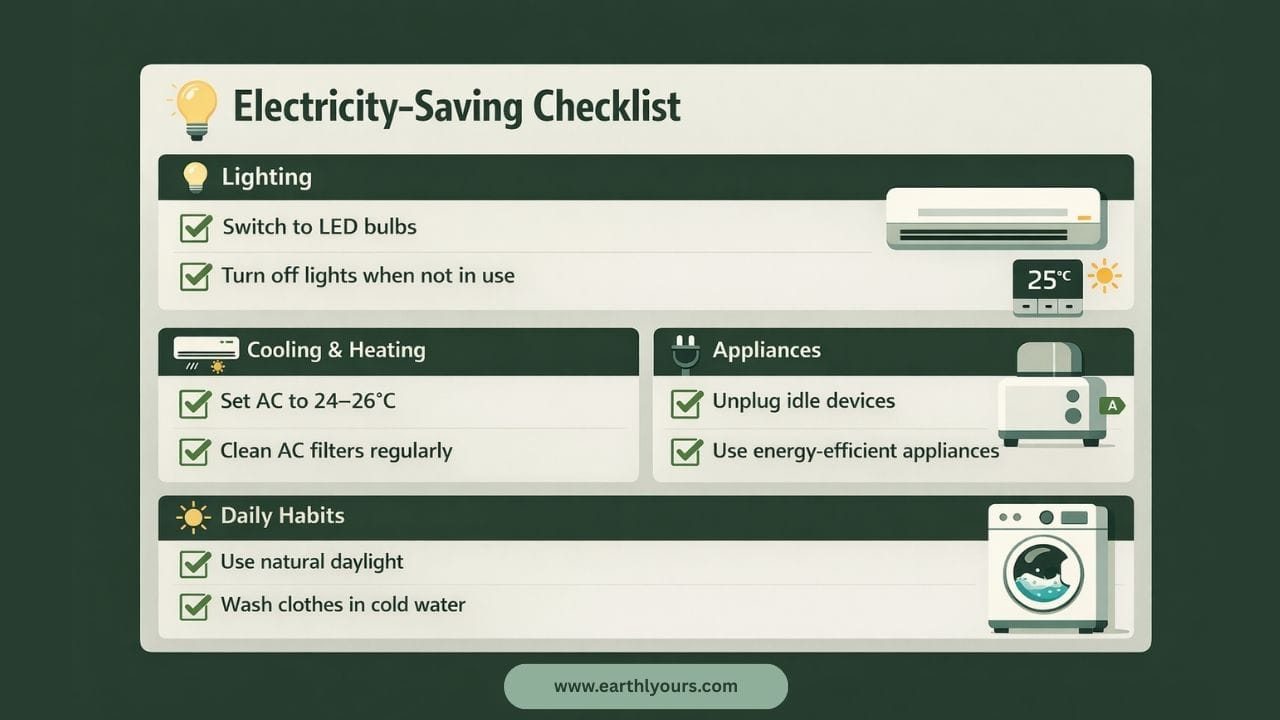
LED bulbs use up to 80% less electricity than traditional CFL or incandescent bulbs. They also last much longer, making them one of the fastest and cheapest ways to lower your power bill.
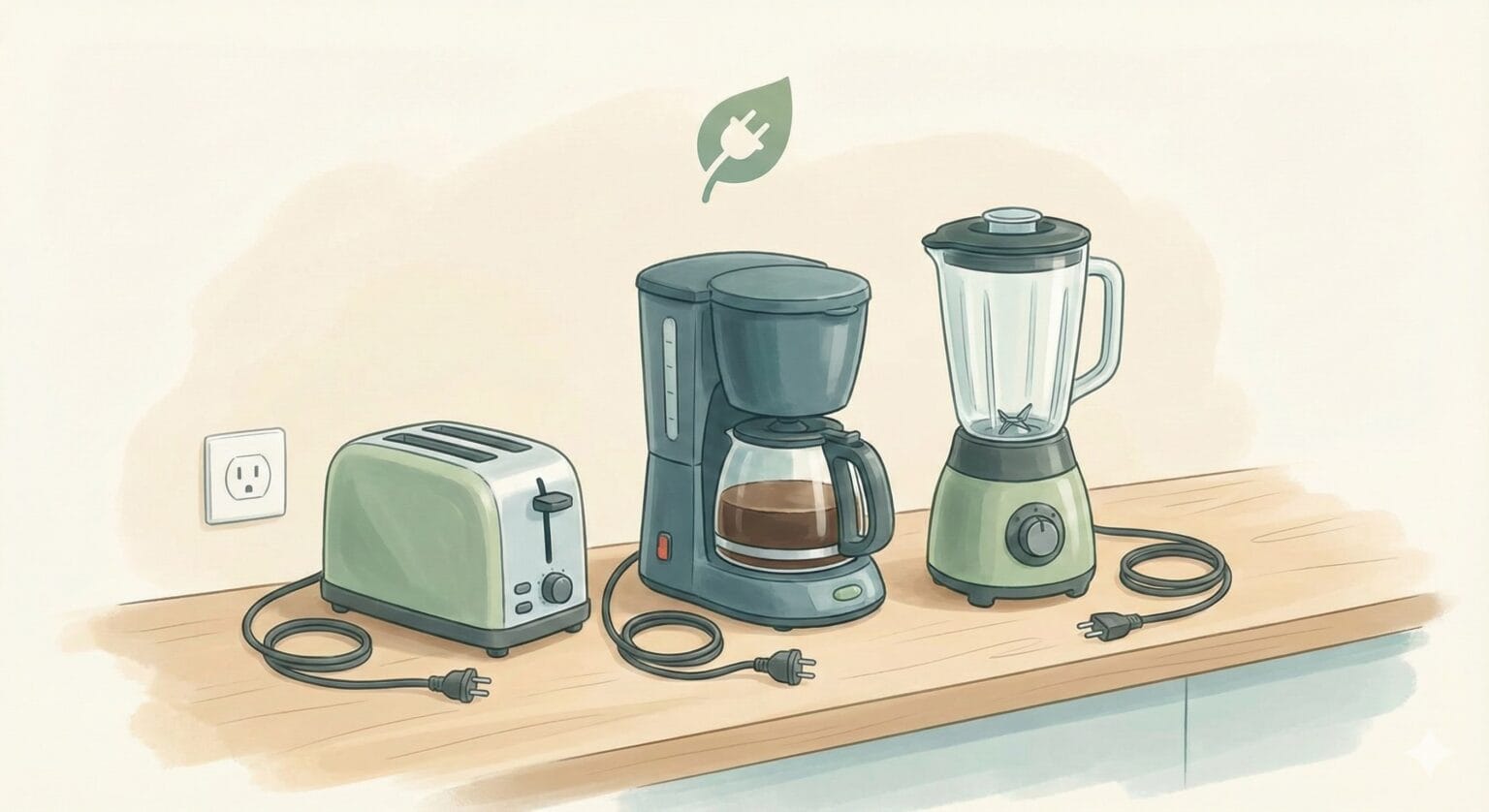
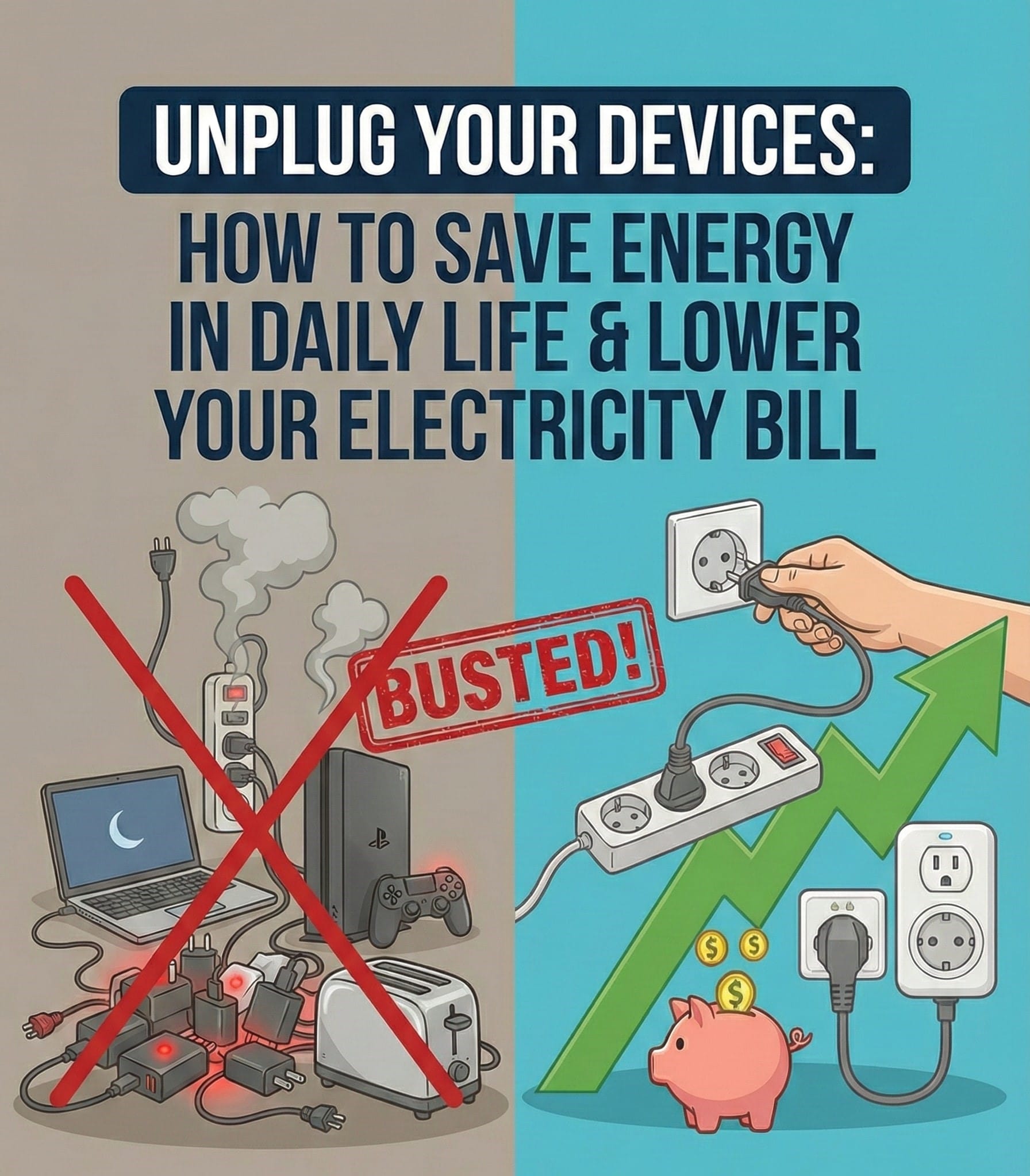
Devices like TVs, chargers, microwaves, and game consoles use electricity even when turned off. Unplugging them or using a smart strip can reduce standby losses by 5–10%.

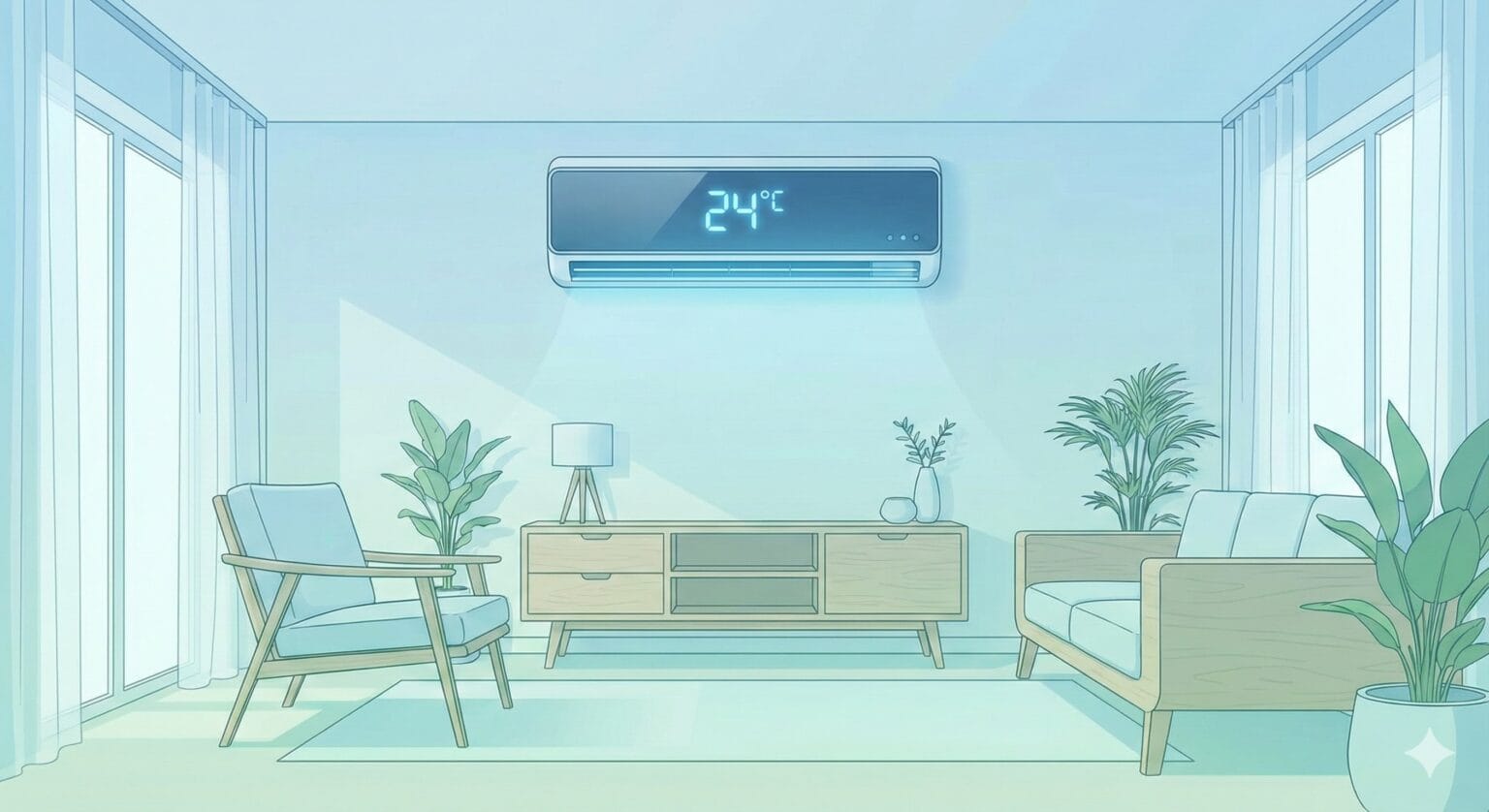
AC accounts for the highest electricity consumption in most homes. The ideal energy-saving temperature is 24–26°C, reducing load while keeping comfort levels high.
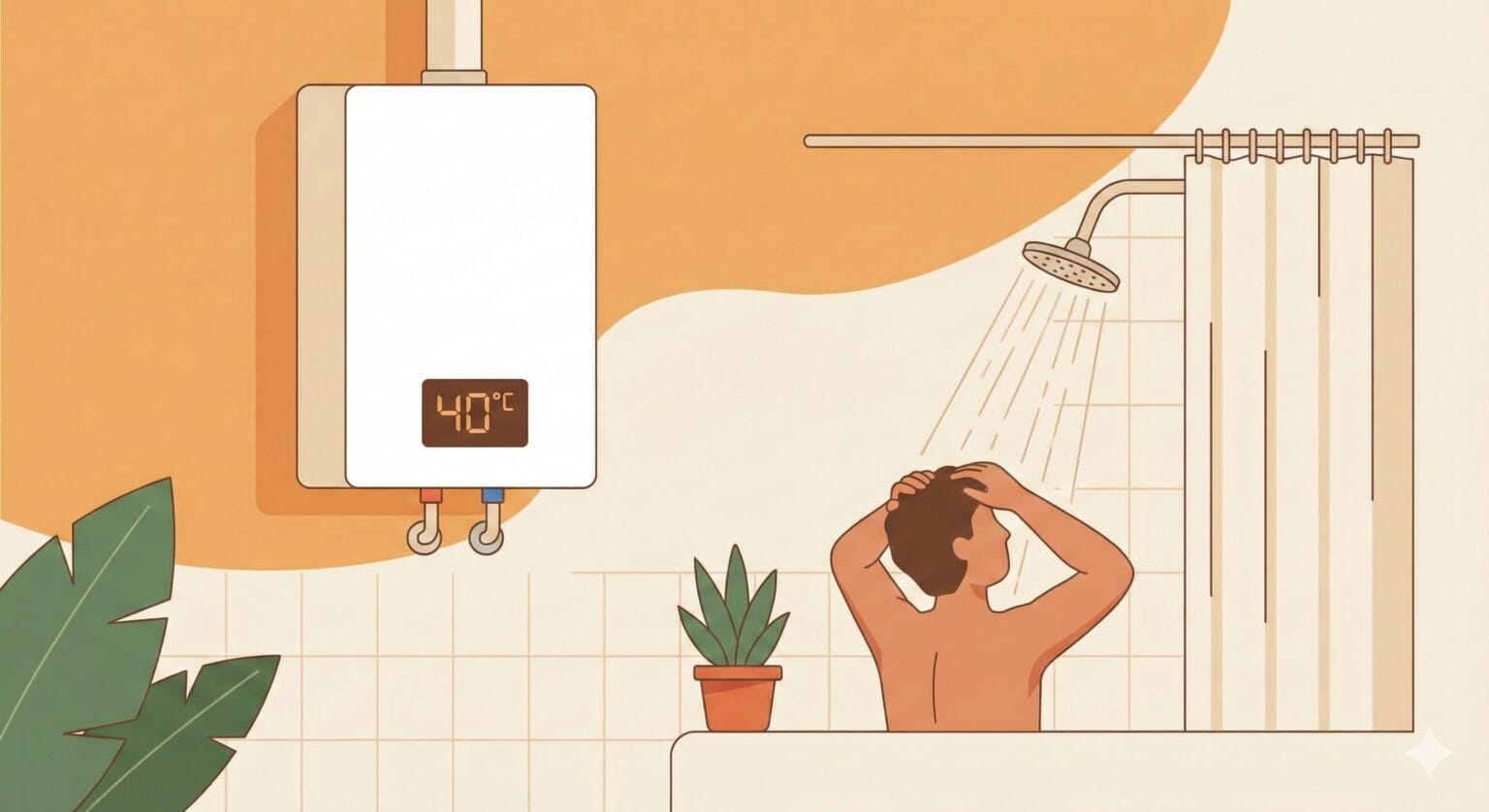
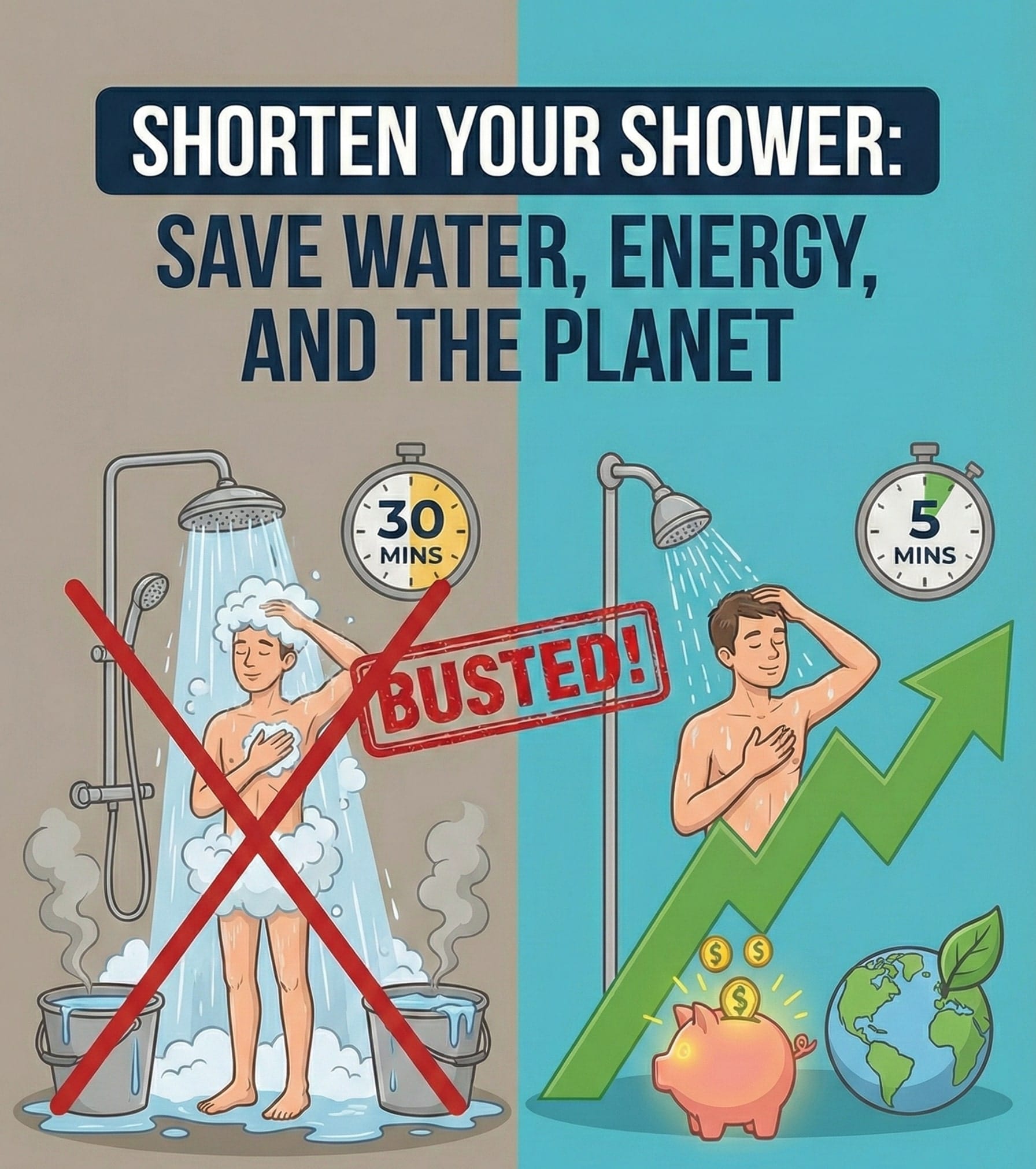
Water heaters consume massive power. Reducing heating time, using warm instead of hot water, and installing low-flow showerheads can drastically reduce energy use.
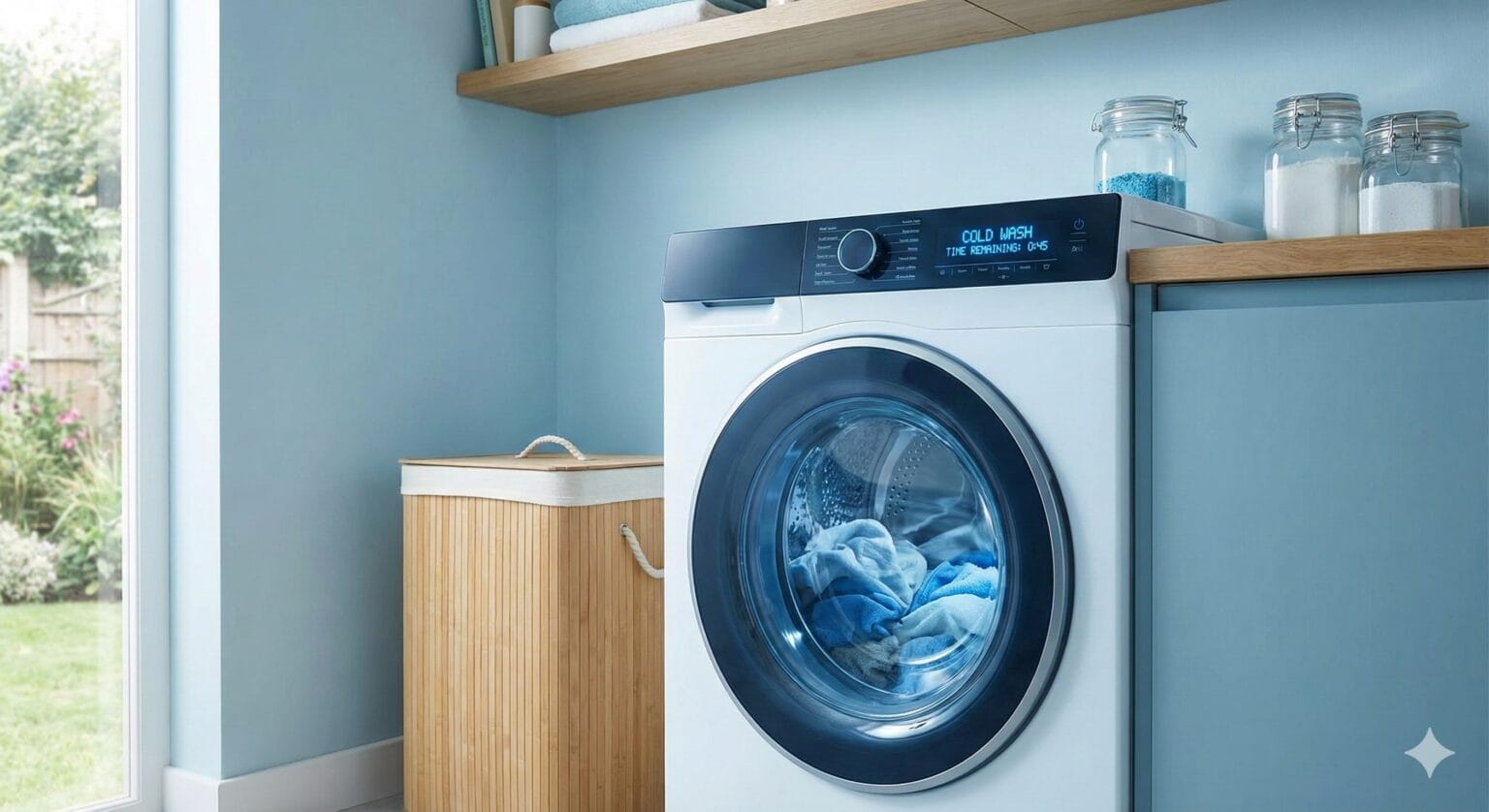
Almost 90% of a washing machine’s electricity is used to heat water. Switch to cold water cycles to cut costs significantly while preserving fabric quality.

Dryers are among the biggest energy consumers. Drying clothes under sunlight or indoors completely eliminates this cost.

Set your fridge to 3–4°C and freezer to -18°C. Keep it 20% empty for airflow and clean the back coils for higher efficiency

Gaps allow hot or cold air to escape, forcing ACs and heaters to work harder. Weather-stripping can reduce energy use by 10–20%.
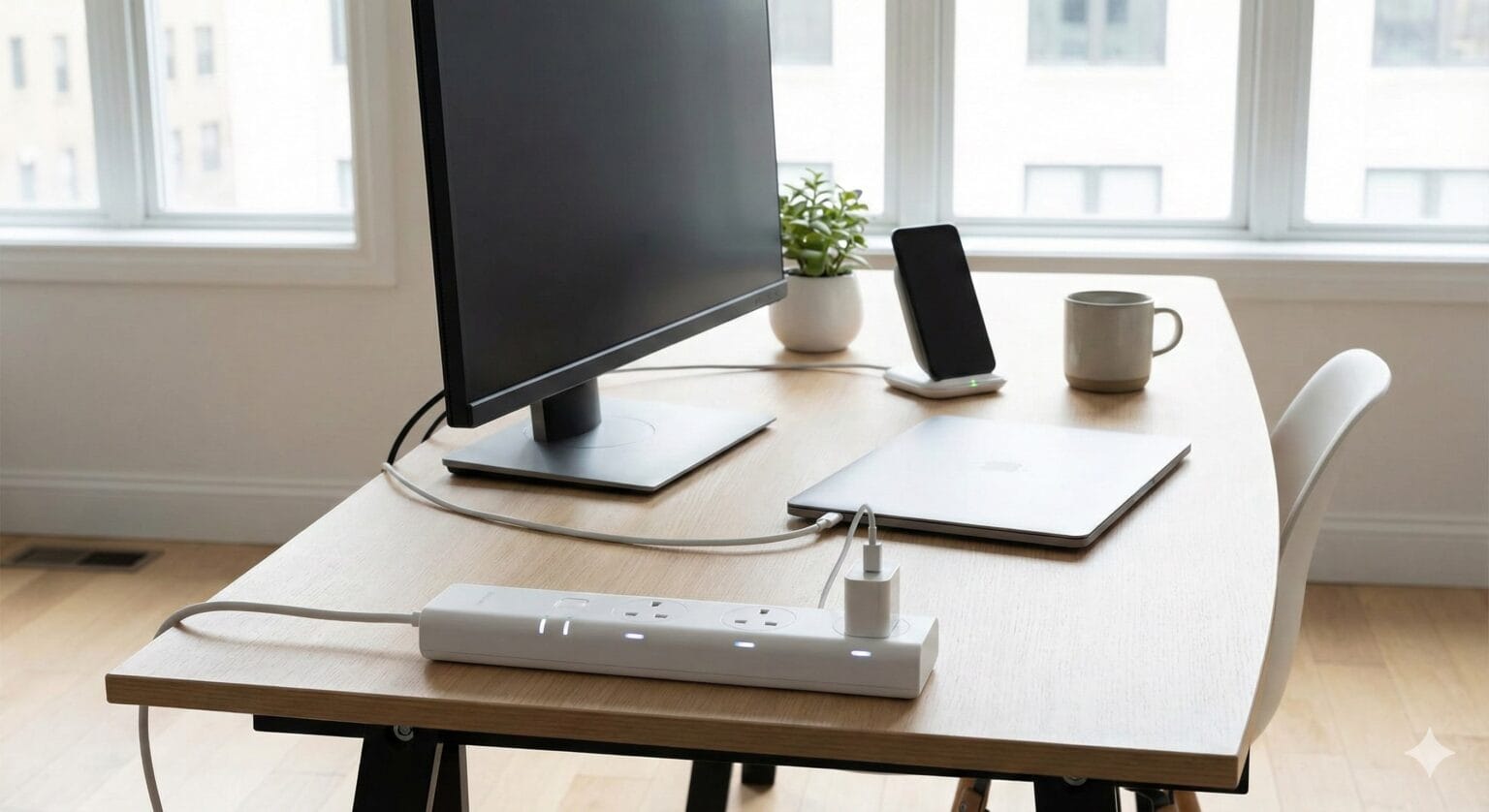
Smart strips cut power to idle devices automatically. Perfect for entertainment systems or computer setups.
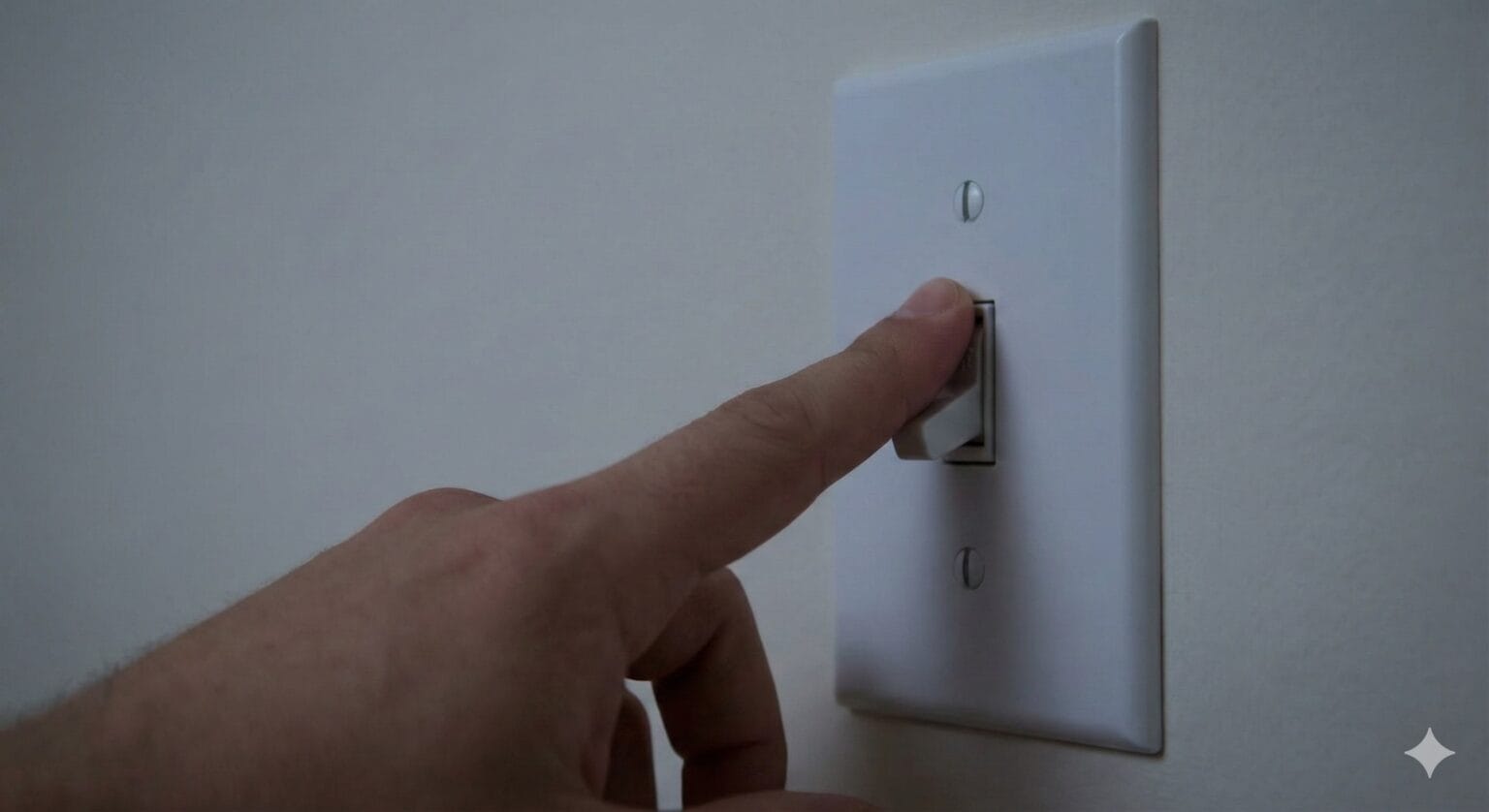
This classic habit still saves 5–10% monthly. Combine with LEDs for even bigger impact

Arrange your workspace near windows to reduce daytime lighting costs. It boosts mood and productivity too.
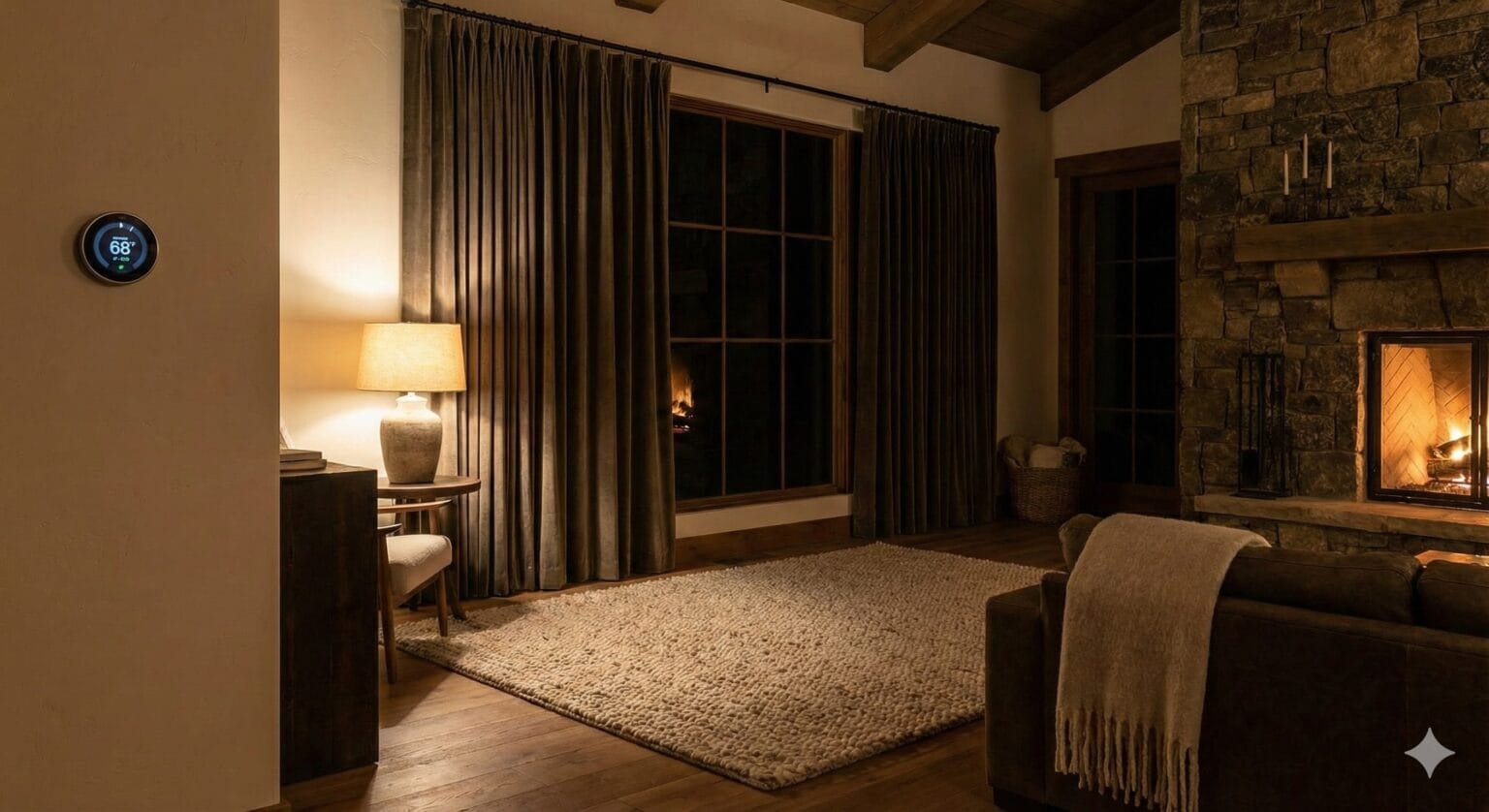
Even simple insulation (curtains, rugs, foam panels) helps maintain indoor temperature and reduces AC/heater strain.
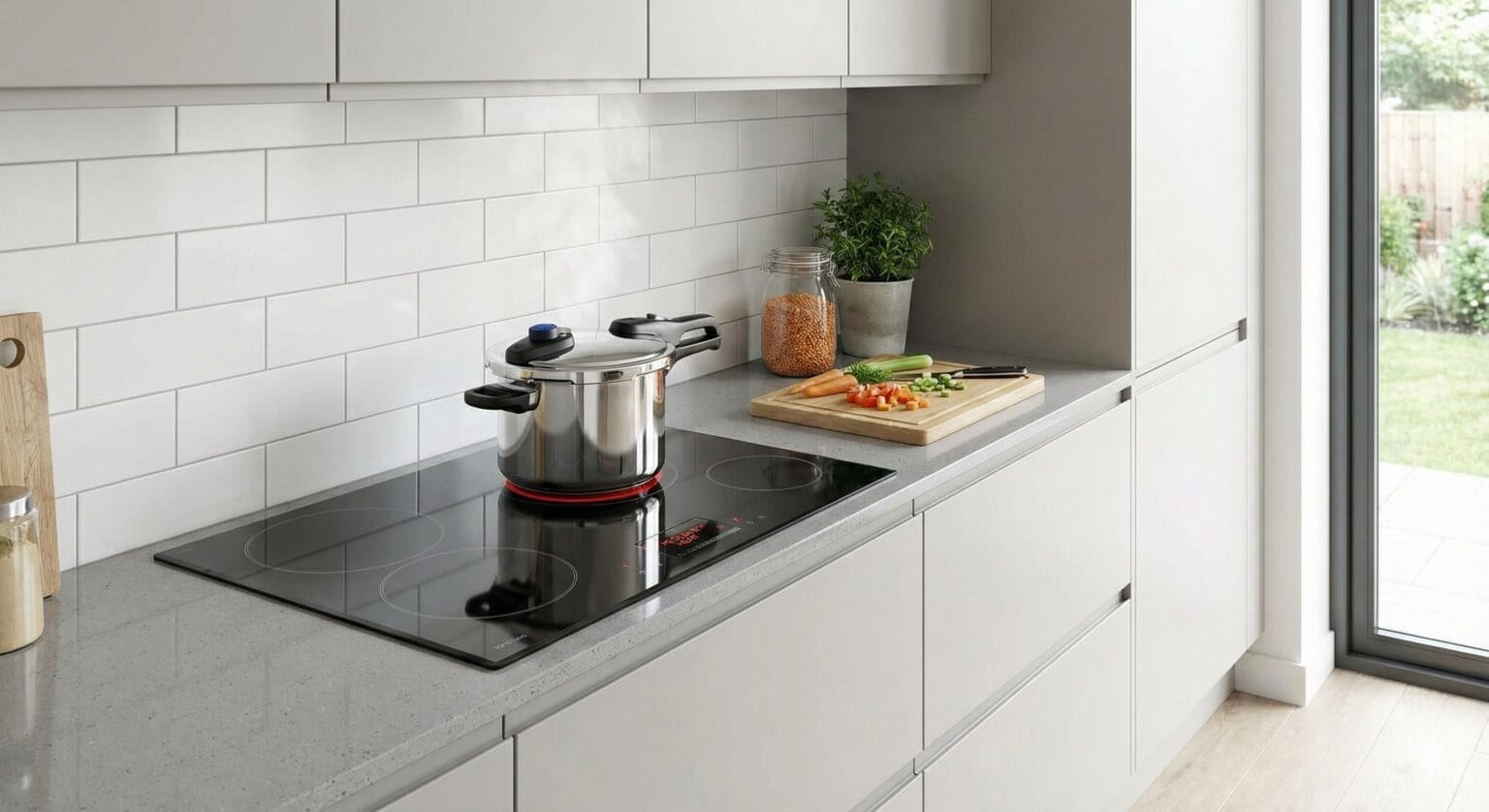
Use pressure cookers, induction cooktops, and batch meal prep to reduce cooking time and take load off electricity.
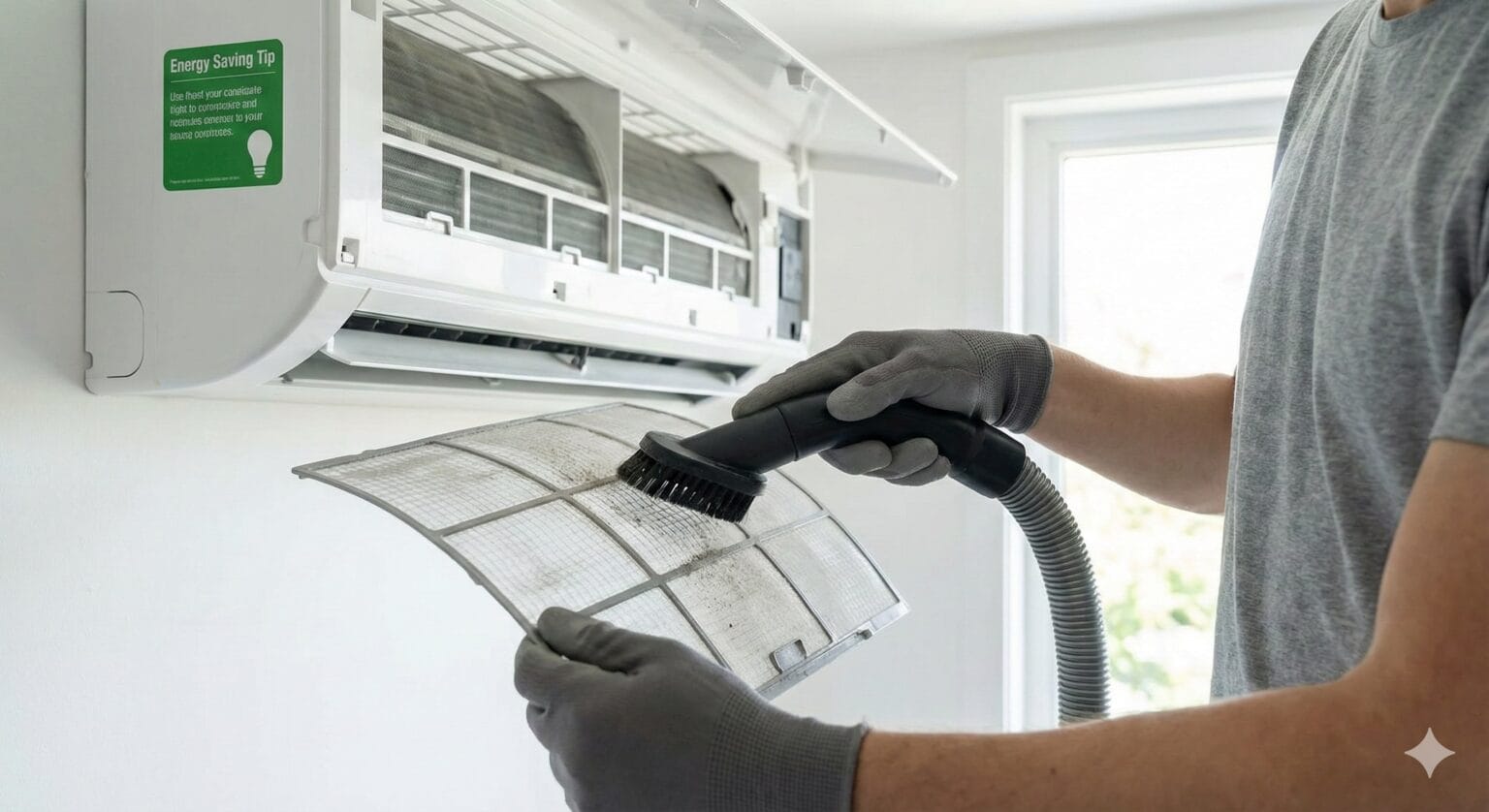
Clean AC filters, fridge coils, and fan blades regularly. Dirty appliances run harder and consume more power.
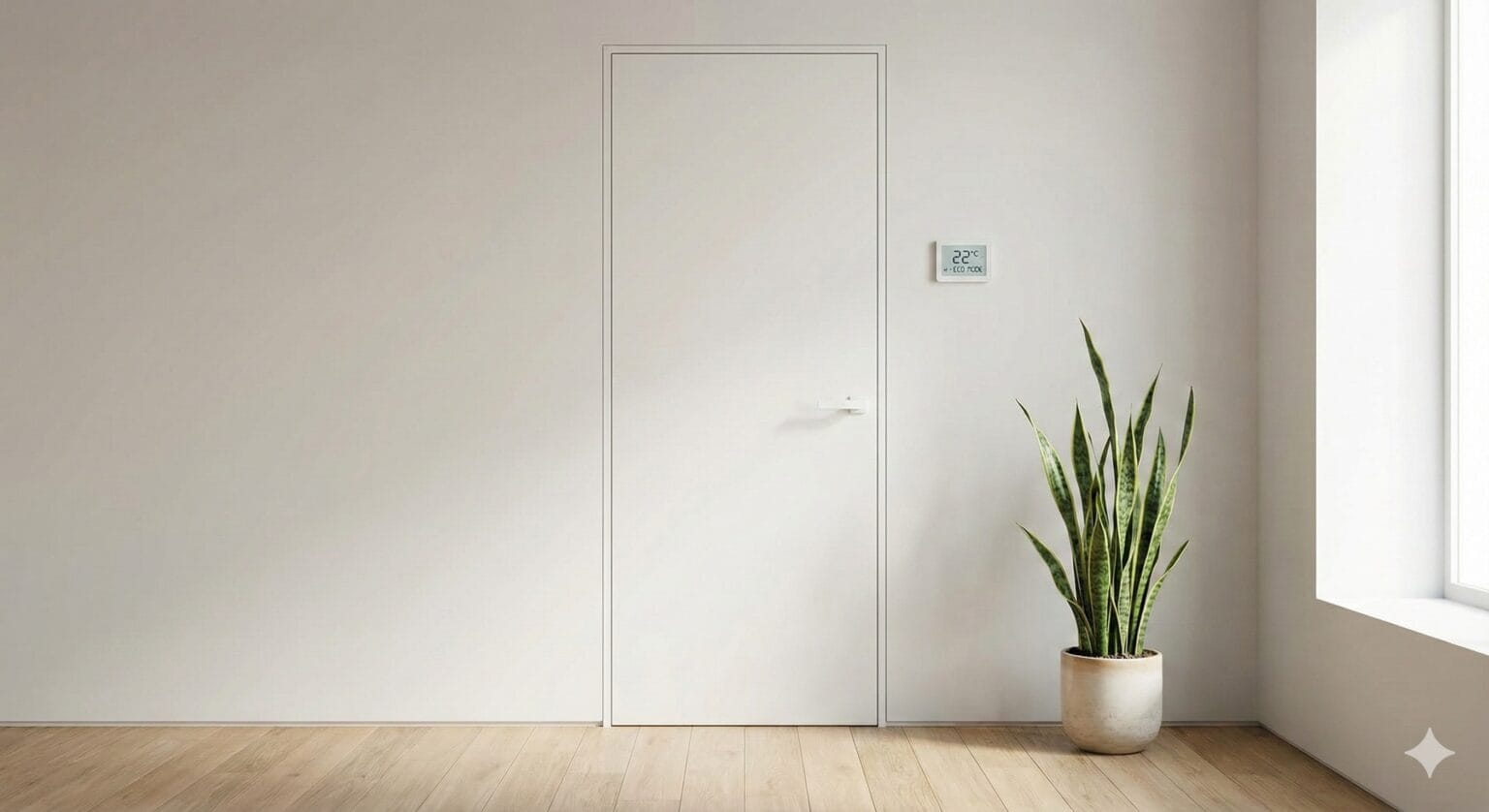
When cooling or heating, shut doors to rooms you aren’t using. This reduces the area your system has to manage.
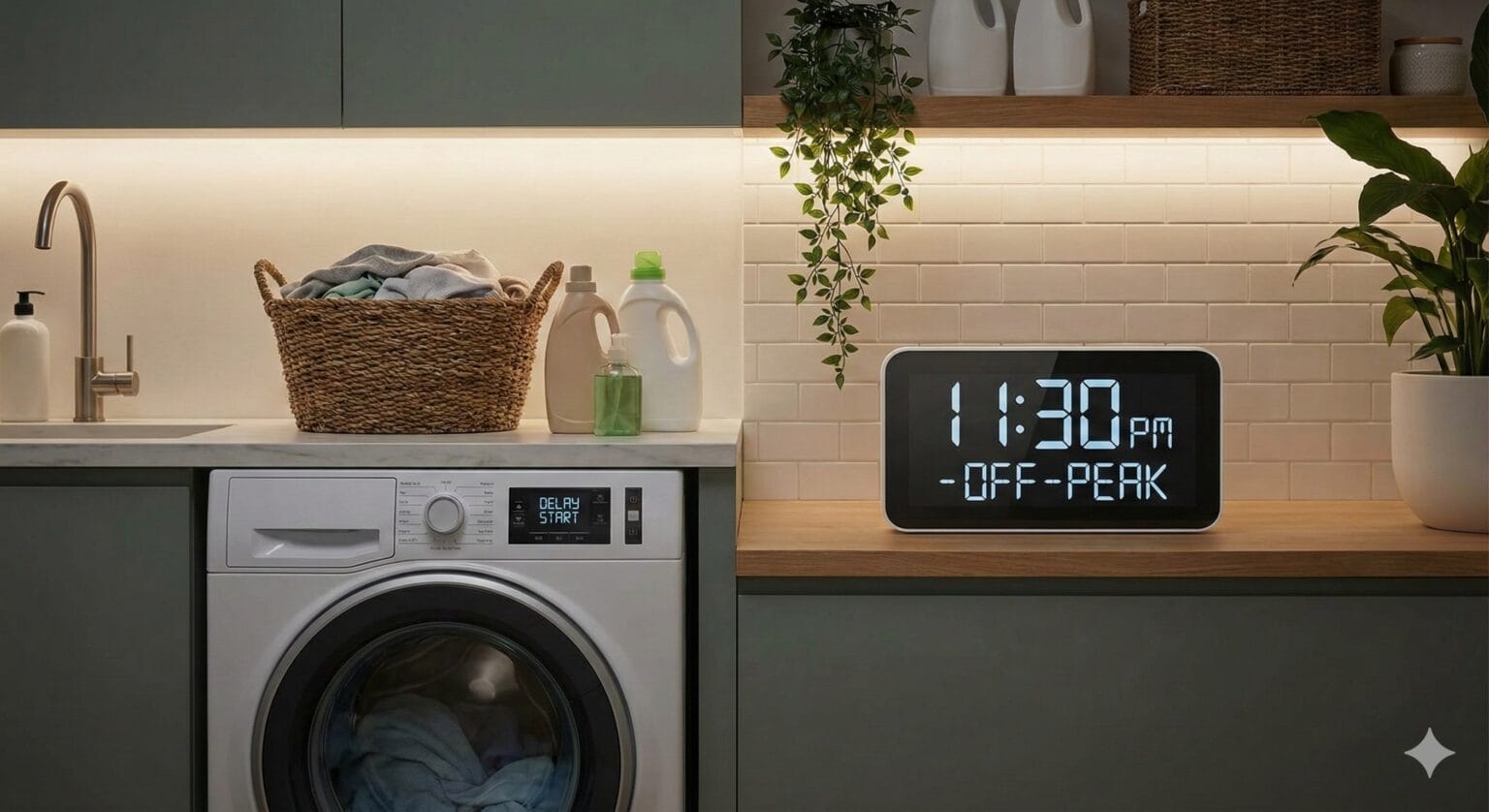
If your city uses TOU pricing, run washing machines, dryers, and dishwashers during cheaper hours
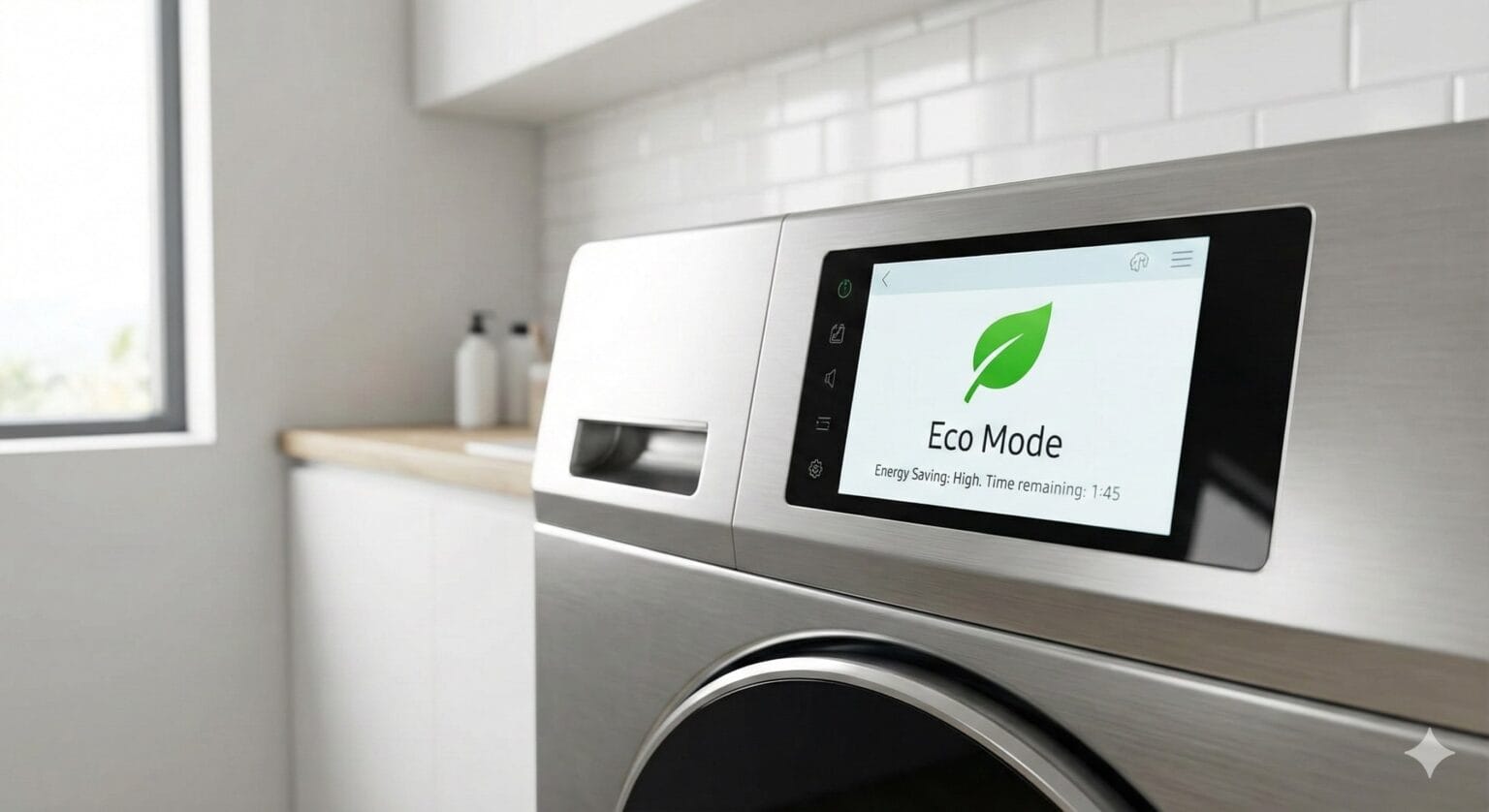
Eco-mode reduces power consumption in ACs, washing machines, and dishwashers without compromising performance
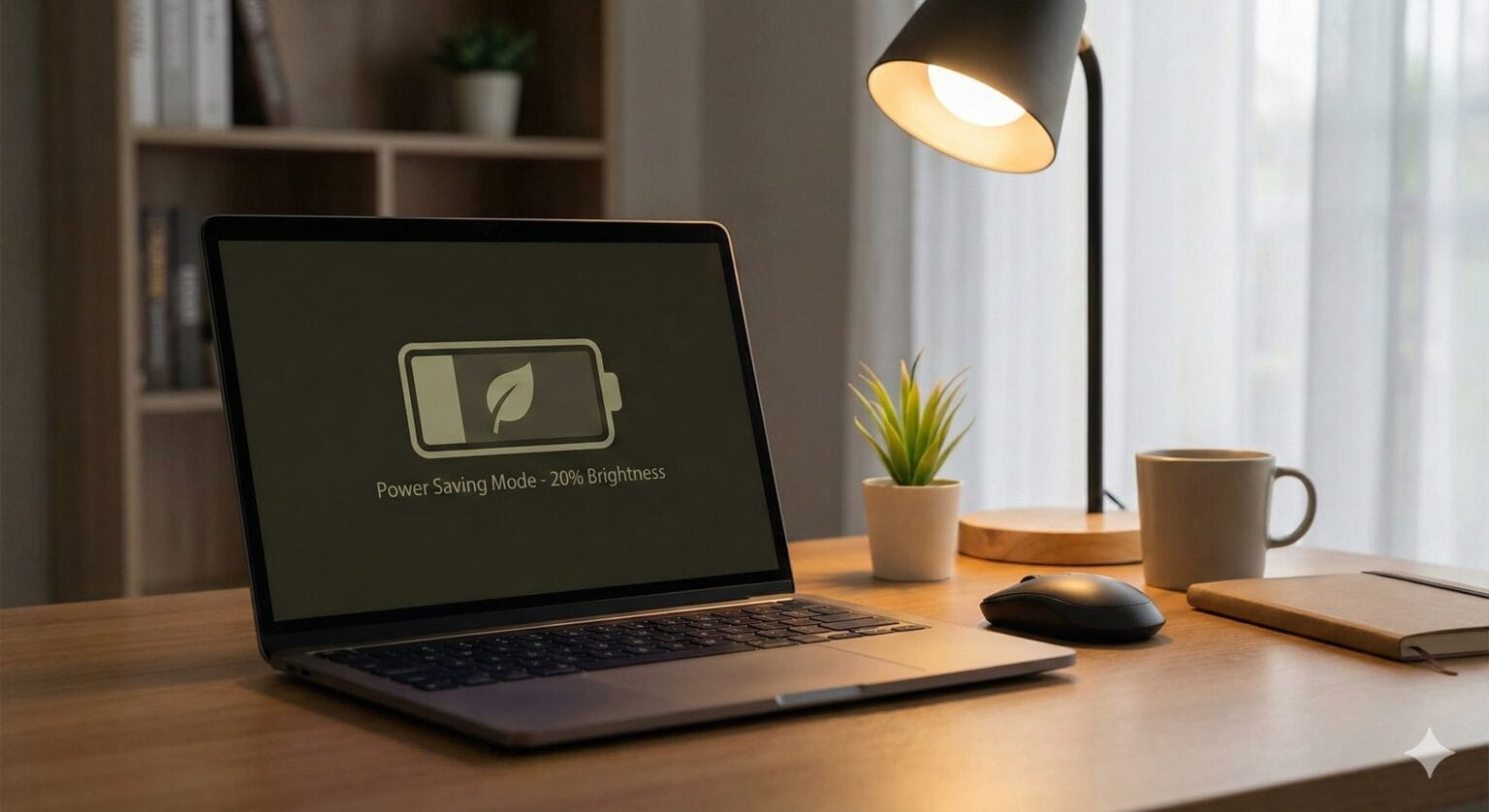
Laptops and phones consume more power on brighter settings. Power-saving mode extends battery life and reduces electricity use
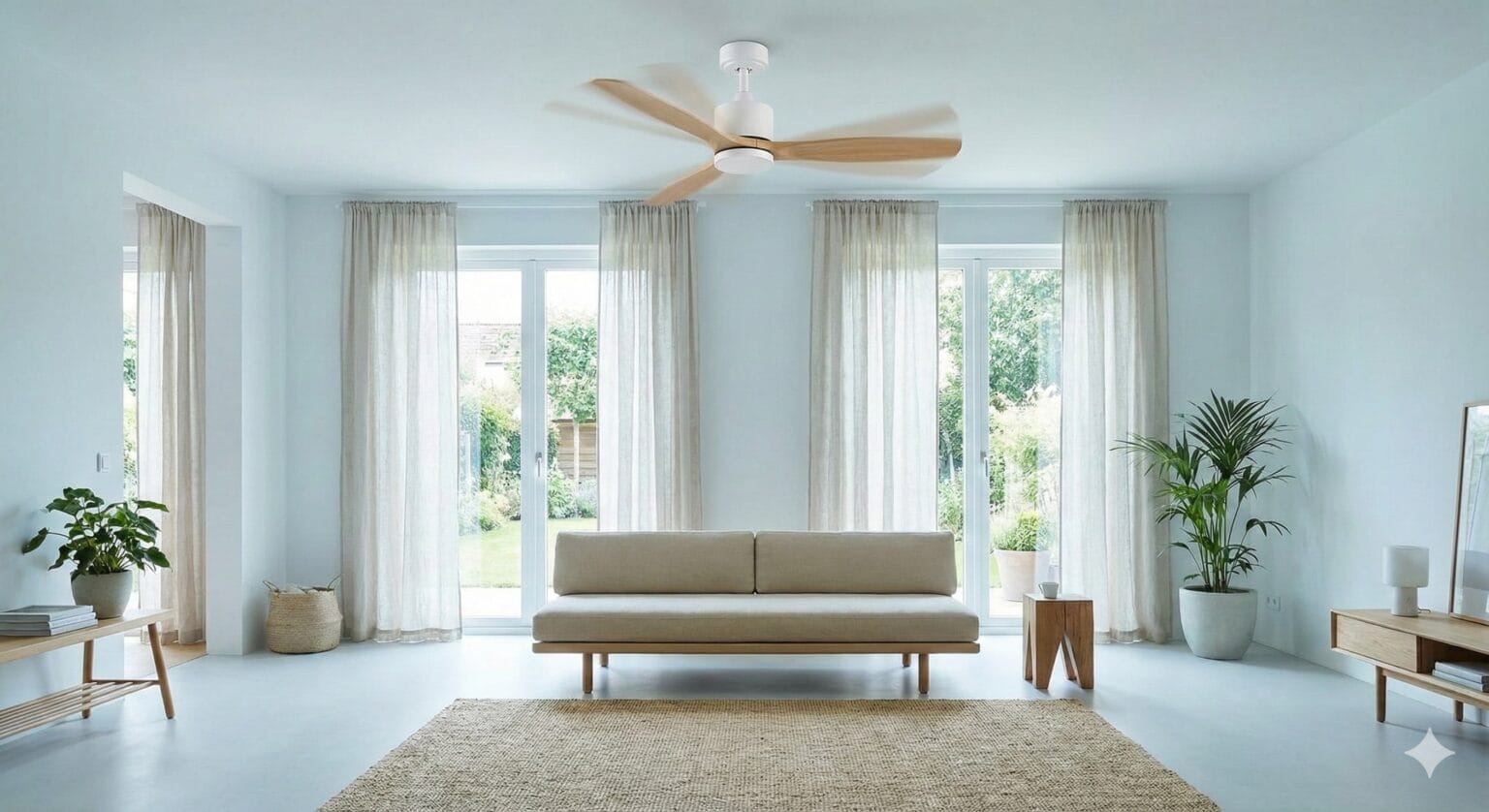
Instead of running the AC for long hours, use it smartly. Turn on your AC for 5–10 minutes to quickly cool the room, then switch it off and let a ceiling fan circulate the cool air
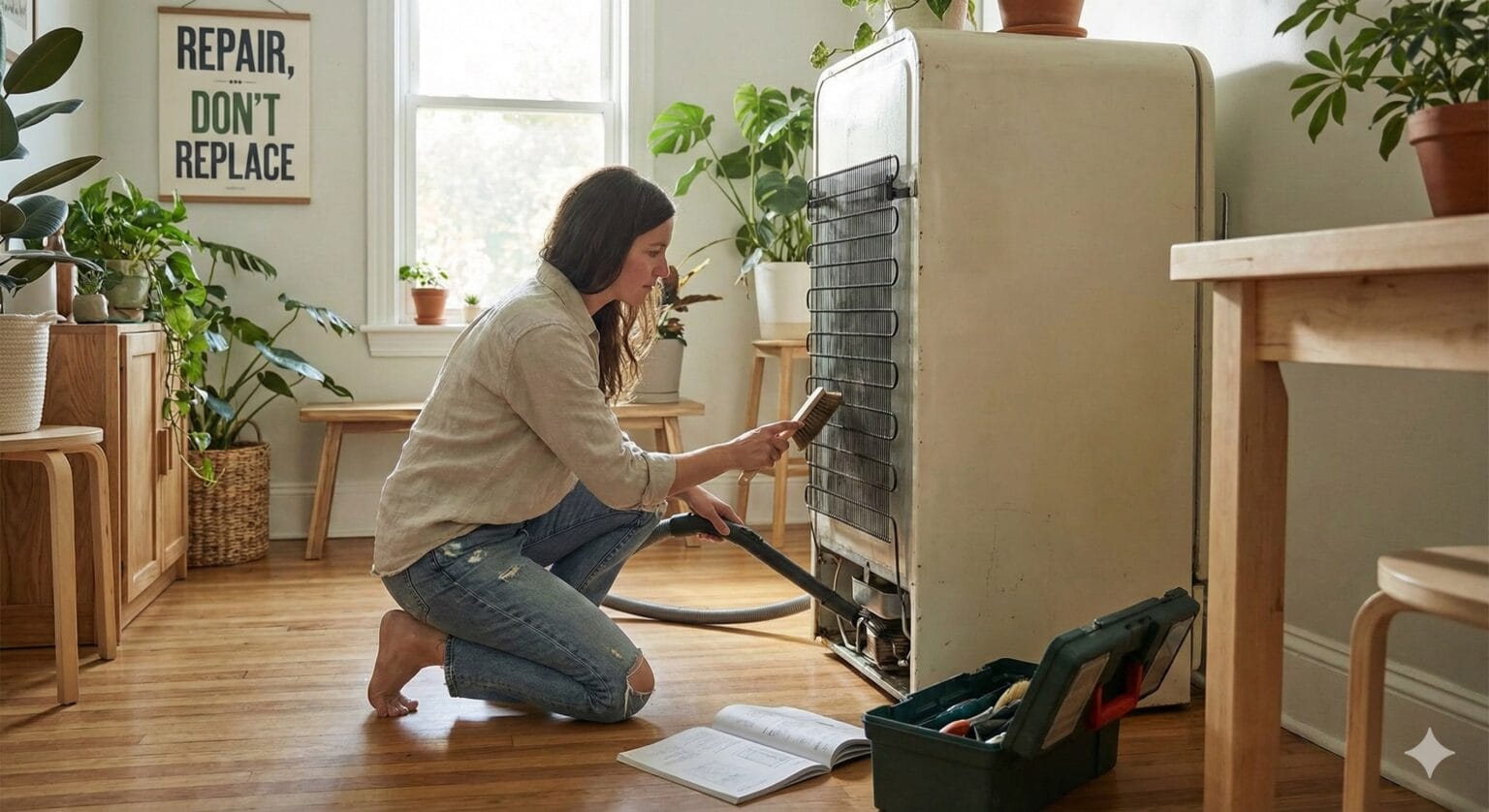
Using and maintaining your current appliances is more eco-friendly and cheaper than replacing things often. Upgrade only when truly needed
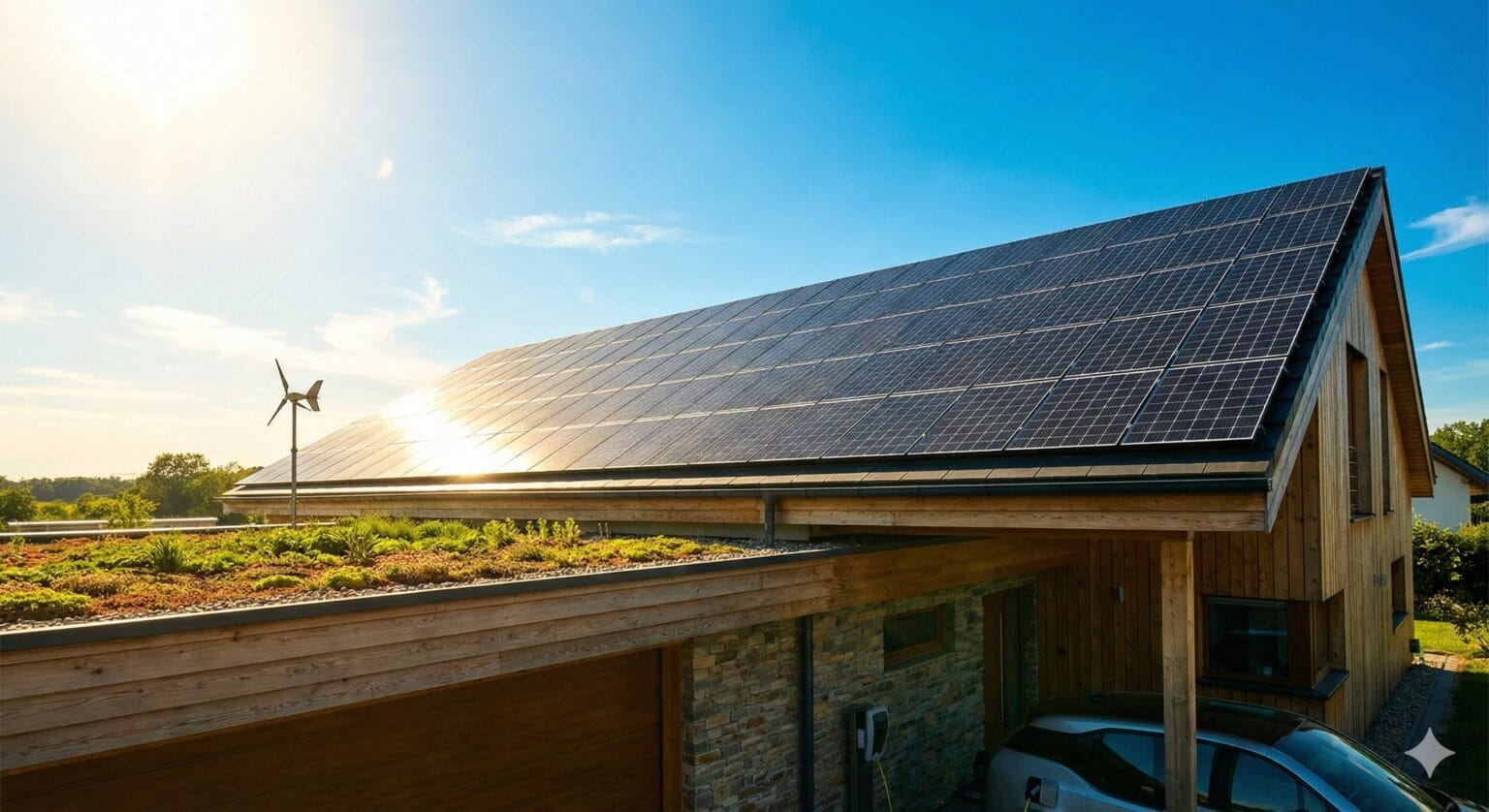
Solar panels can significantly reduce your electricity bills, but they are a long-term investment, not a quick fix. If you have the budget, installing even a small rooftop solar system can offset energy usage and provide clean power for years. But if money is tight, it's perfectly okay to skip solar for now and focus on zero-investment energy-saving habits.
A sustainable home isn’t built in a day — it’s built in the tiny choices you make every single moment
If you want one simple trick that makes the biggest difference, it’s this:
Cutting 90% is possible only when you change habits consistently. Focus on:
Cutting your electricity bill doesn’t require expensive gadgets, fancy equipment, or major home upgrades. The real change begins with your daily habits — how you cool your home, how long you keep lights on, how you use appliances, and how mindful you are about standby power.
When you start applying even 5–7 of the habits listed above, you’ll see a noticeable drop in your monthly bill. And when you combine all 21, the savings compound month after month.
More importantly, these habits don’t just save you money —
they make your home more sustainable, more energy-efficient, and more future-ready.
By following these small daily habits, you’ll quickly understand how to lower your electricity bill without sacrificing comfort
If you found these tips helpful, share this blog with someone who’s trying to live smarter, greener, and more budget-friendly.
Let’s inspire more households to adopt conscious living — one tiny habit at a time.
The biggest electricity consumers in most homes are:
Heating & cooling (AC + heaters)
Water heating
Refrigerators
Laundry appliances (washer + dryer)
Lighting
Electronics on standby
Knowing this also helps you understand how to lower your electricity bill more effectively.
Use a plug-in energy monitor to measure the exact power consumption of each appliance.
It shows wattage, energy use per hour, and estimated cost.
It’s possible when you combine multiple habits:
Reduce AC and heater usage
Switch to LED lights
Eliminate standby power
Wash clothes in cold water
Dry clothes naturally
Run appliances during off-peak hours
Improve insulation
Use fans after a short AC run
If budget allows, add a small solar setup
Most of these cost $0 to start.
n most U.S. states, running a 1.5-ton AC for 1 hour costs $0.25–$0.50 depending on electricity rates (10–20 cents per kWh).
This means 5 hours/day can cost $1.25–$2.50 daily, or $40–$75 per month.
Yes.
A ceiling fan typically uses 50–75 watts, while an AC uses 1,000–2,000 watts.
That means fans consume 20–40x less electricity.
The smart strategy is: Run AC for 5–10 minutes → switch to fans to circulate cool air.
The fastest, zero-cost methods are:
Turn off unused lights
Unplug standby devices
Use fans instead of AC
Maximize natural daylight
Shorten water heater usage
Avoid running half loads in washing machines
These alone can cut bills by 10–30% in most homes.
Yes.
Chargers, TVs, gaming consoles, microwaves, and smart devices consume power even when not being used. This is called phantom load.
Set your AC to 75–78°F (24–26°C) for best energy savings.
Lowering the temperature by even 2–3 degrees can increase electricity usage by 10–15%.
Only if necessary.
You don’t need to replace working appliances.
But when your old appliance breaks down or becomes too inefficient
Solar is great, but optional.
Choose solar only if:
You have the budget
You plan to stay in the home long-term
Your roof gets good sunlight
Even a small system can reduce bills, but it’s not mandatory for saving electricity
Renters can try:
Using LED bulbs
Adding curtains & rugs for insulation
Using fans before AC
Blocking sunlight during peak heat
Switching off unused appliances
Using cold water washing
All these require zero investment.

Start your eco-conscious journey with us today
Download your personalized tracker and begin your daily eco-actions. One habit at a time, your choices make the difference.