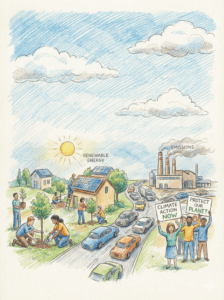
Climate change is a phrase we hear almost every day — in headlines, documentaries, classrooms, and conversations. Yet for many people, it still feels distant, confusing, or overwhelming. We know something is changing. We sense it in longer summers, unpredictable rainfall, stronger heatwaves, and shifting seasons. But what does climate change really mean? And what is actually happening to the planet?
If you’ve ever wondered, “What is climate change in simple words?” or “How does climate change affect everyday life?” — you’re not alone.
In simple terms, climate change refers to long-term shifts in Earth’s temperature, weather patterns, and natural systems. It’s not about one hot day or one heavy storm. It’s about gradual changes unfolding over decades — in the atmosphere, oceans, forests, and living ecosystems that support life.
This guide is here to explain climate change clearly and calmly. We’ll explore what science is observing, what’s driving these changes, how they affect biodiversity and daily life, and where human choices fit into the picture — especially within the broader idea of eco-conscious living, where awareness shapes everyday decisions.
Not to alarm you — but to help you understand.
Because meaningful change begins not with fear, but with clarity.
People often use climate and weather as if they mean the same thing — but they describe very different things.

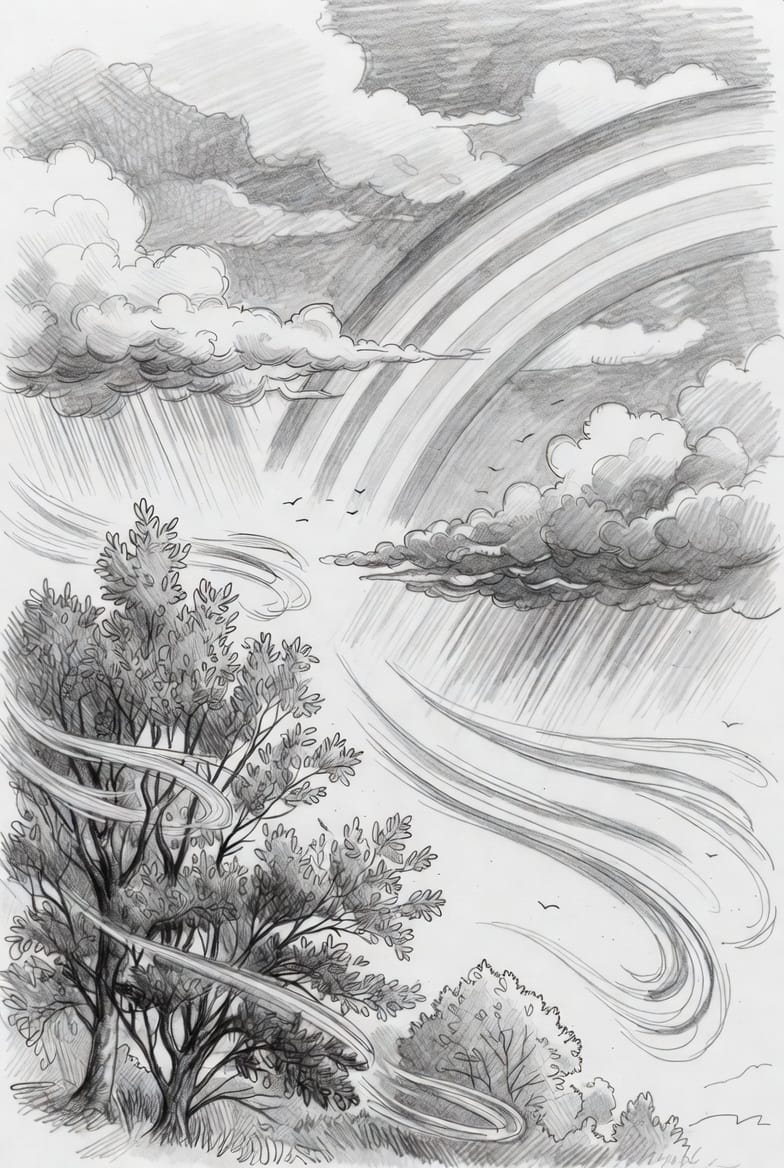
Weather refers to what’s happening outside right now or over short periods. Is it hot today? Is it raining this week? Is there a storm tomorrow? That’s weather.
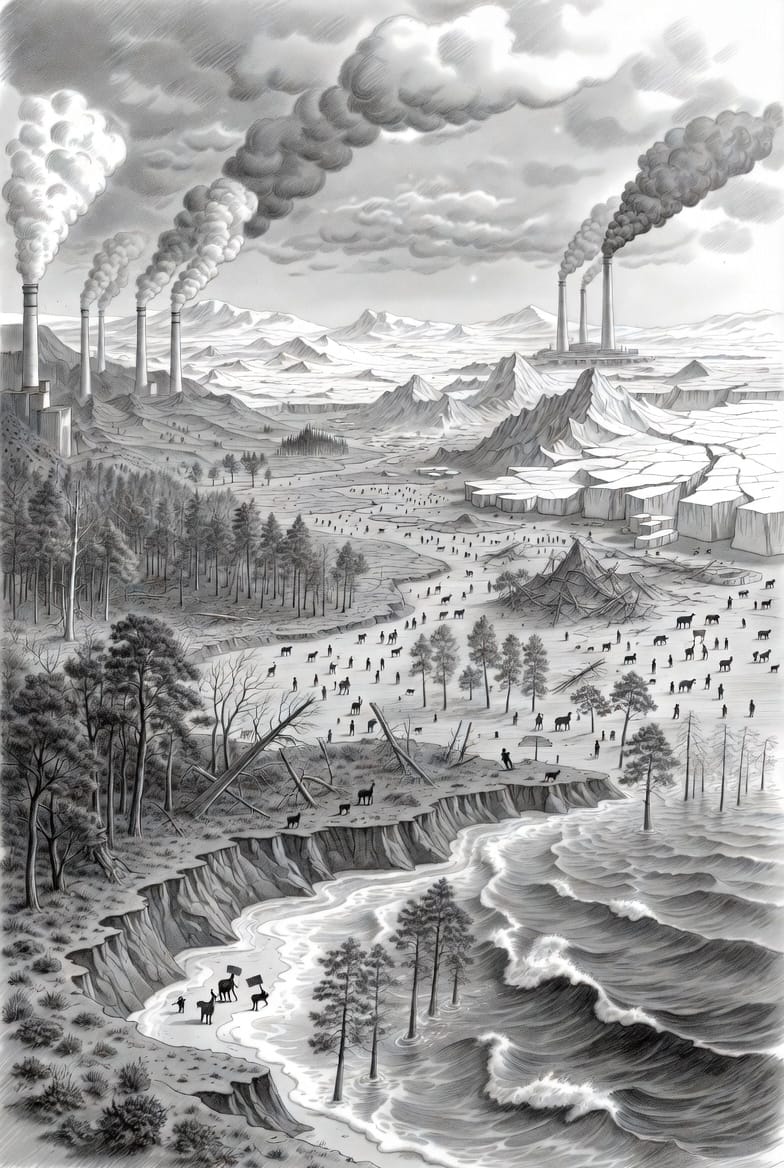
Climate, on the other hand, describes the long-term patterns of a place — usually measured over 30 years or more. It looks at averages and trends: typical temperatures, rainfall patterns, seasonal cycles, and how often extreme events occur.
So while weather can change in hours or days, climate changes over decades.
A single heatwave doesn’t prove climate change.
But when heatwaves become more frequent, last longer, and appear across regions for many years in a row — that signals a shift in climate.
In simple terms:
Climate change means that Earth’s long-standing patterns are gradually shifting — altering how hot it gets, how rain falls, how seasons behave, and how ecosystems function.
This distinction matters, because climate change is not about isolated events. It’s about the long-term transformation of the systems that support life on this planet.
Climate change is not happening by accident. It is the result of a long buildup of heat-trapping gases in Earth’s atmosphere, primarily caused by human activities over the past two centuries.
To understand this clearly, it helps to look at two things:
natural climate patterns and human-driven changes.
Climate change is not a distant possibility. It is already reshaping the planet in measurable, observable ways.
Across land, oceans, and living systems, scientists are tracking consistent global changes that show how Earth’s long-standing patterns are shifting.

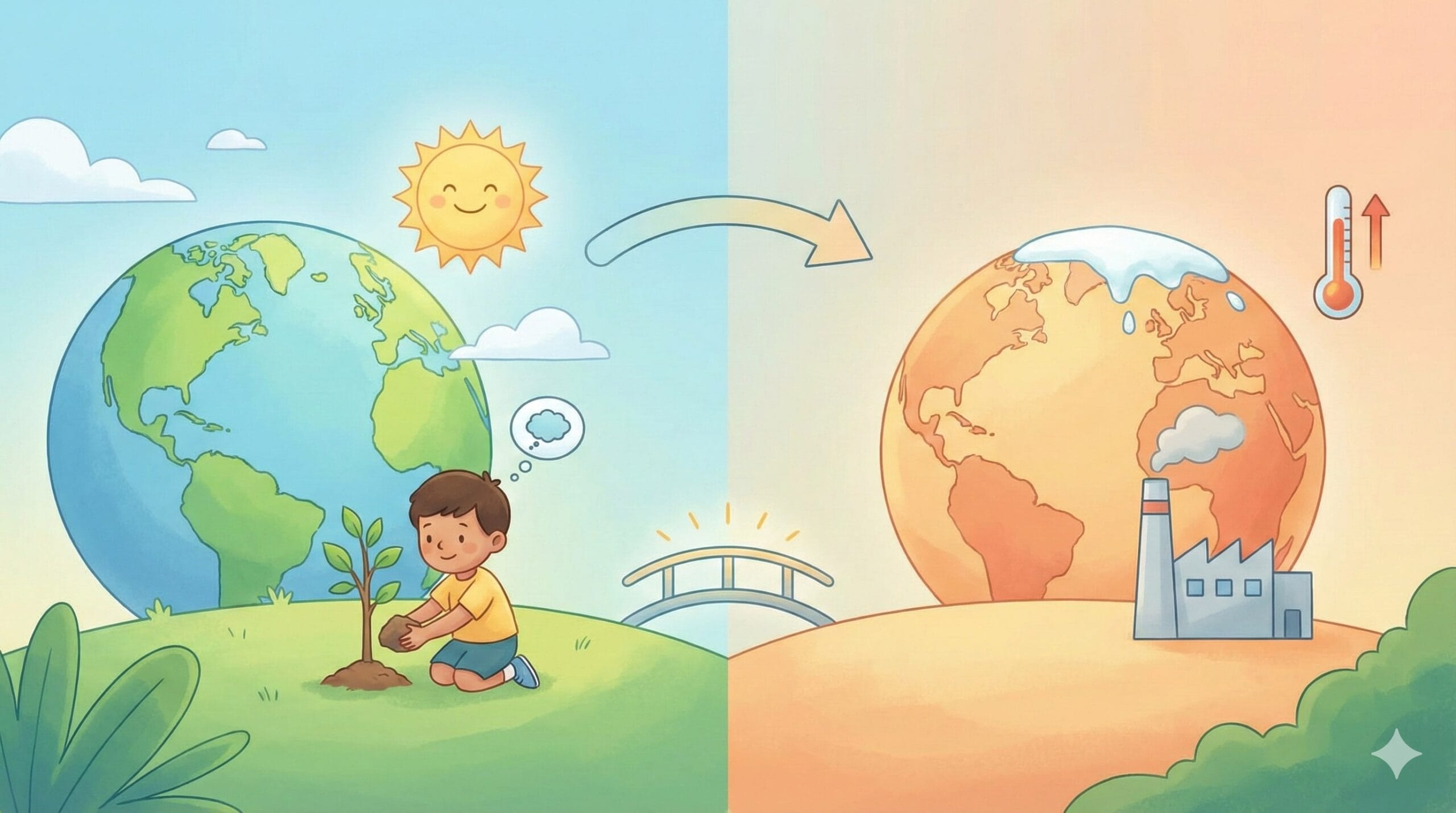
Earth’s average surface temperature has increased significantly since the late 1800s. The past decade has been the warmest recorded in modern history.
This warming is not evenly distributed. Some regions are heating much faster than others, intensifying heatwaves, altering growing seasons, and placing stress on natural and human systems.
Warmer air also holds more moisture, which influences rainfall patterns — contributing to heavier downpours in some areas and longer droughts in others.

Glaciers around the world are shrinking. Polar ice sheets in Greenland and Antarctica are losing mass. Arctic sea ice is thinning and retreating.
As land-based ice melts and ocean water expands with heat, global sea levels continue to rise.
This affects coastal ecosystems, increases flooding risks, accelerates shoreline erosion, and places low-lying communities and island nations under growing pressure.

Climate change does not cause individual storms or heatwaves by itself. But it changes the conditions in which they form.
Warmer oceans provide more energy for powerful storms. Hotter air intensifies heatwaves. Altered atmospheric patterns affect rainfall distribution.
As a result, many regions are experiencing:
These shifts strain infrastructure, agriculture, water systems, and emergency response capacities.
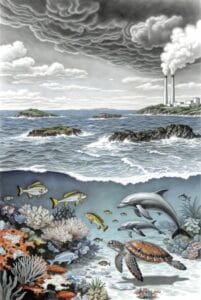
Oceans absorb most of the excess heat trapped by greenhouse gases.
As a result, ocean temperatures are rising, affecting marine currents, weather systems, and underwater ecosystems. Warmer oceans also absorb more carbon dioxide, leading to ocean acidification — a chemical change that interferes with shell-forming organisms and coral growth.
These combined changes influence fisheries, coral reefs, coastal protection, and the global climate system itself

Plants, animals, and ecosystems evolved around stable climate patterns.
As temperatures and seasons shift, many species are being forced to:
Some species can adjust. Many cannot.
This growing imbalance affects food chains, pollination, soil health, and ecosystem stability — connections that ultimately support human life as well.
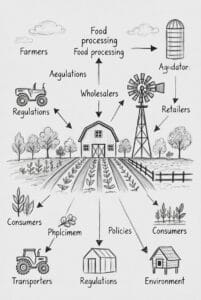
Climate change is not one single event.
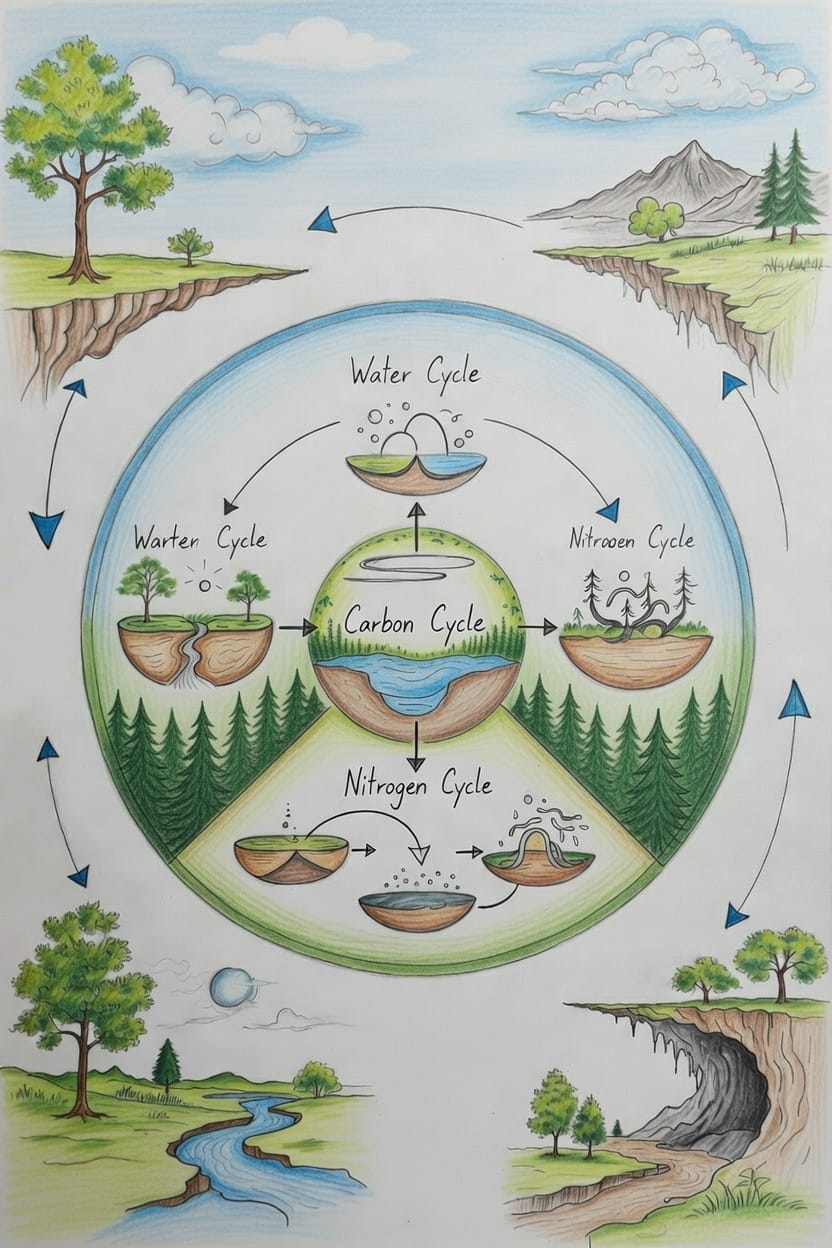
It is a network of slow, interacting changes unfolding across Earth’s atmosphere, oceans, ice systems, and living environments.
And because these systems are interconnected, shifts in one area ripple into many others.
Climate change isn’t only happening in distant ice sheets, deep oceans, or scientific reports. Its effects are increasingly showing up in the spaces people live, work, grow food, and raise families — especially inside our homes, where sustainable home living matters most.
Often quietly.
Sometimes suddenly.
Always gradually shaping daily conditions.
Here are some of the most visible ways climate change is already influencing everyday life.

Climate patterns play a central role in how food is grown.
Shifts in temperature, rainfall, and seasonal cycles affect soil health, crop productivity, and pest behavior. Longer droughts reduce yields in some regions. Unpredictable rainfall damages harvests in others. Heat stress impacts both crops and livestock.
For many farming communities, growing seasons are becoming harder to predict. This influences food availability, nutritional stability, and long-term agricultural resilience — even shaping everyday sustainable kitchen habits
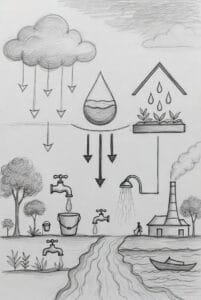
Climate change is altering how water moves through the planet.
Some areas experience heavier rainfall and flooding. Others face shrinking freshwater supplies due to prolonged droughts, glacier loss, and higher evaporation rates.
These shifts affect drinking water access, household consumption, irrigation, sanitation systems, and energy production. In many regions, water stress is becoming one of the most immediate and visible climate-related challenges.
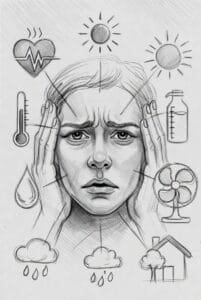
Rising temperatures influence human health in multiple ways.
Longer and more intense heatwaves increase the risk of heat exhaustion, dehydration, cardiovascular stress, and respiratory strain — especially for older adults, children, and people with existing health conditions.
Warmer conditions also expand the range of some disease-carrying insects, influence air quality, and contribute to wildfire smoke exposure.
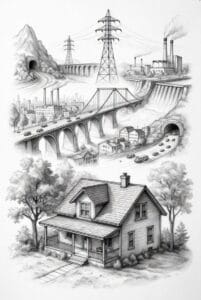
Homes and cities are built around historical climate patterns.
As those patterns shift, infrastructure faces new challenges — from heat-stressed power grids — and the way we use electricity at home — to flooding risks and stormwater management
Coastal communities face increasing exposure to rising seas and erosion. Urban areas experience stronger heat island effects. Rural regions confront agricultural and water-system vulnerabilities.

Climate-related disruptions influence employment, migration patterns, public spending, food markets, and disaster recovery systems.
Extreme weather events damage property and livelihoods. Agricultural instability affects rural economies. Health pressures increase healthcare demands. Infrastructure adaptation requires long-term investment.
Over time, these combined effects shape economic stability, social equity, and regional development.
Why this matters
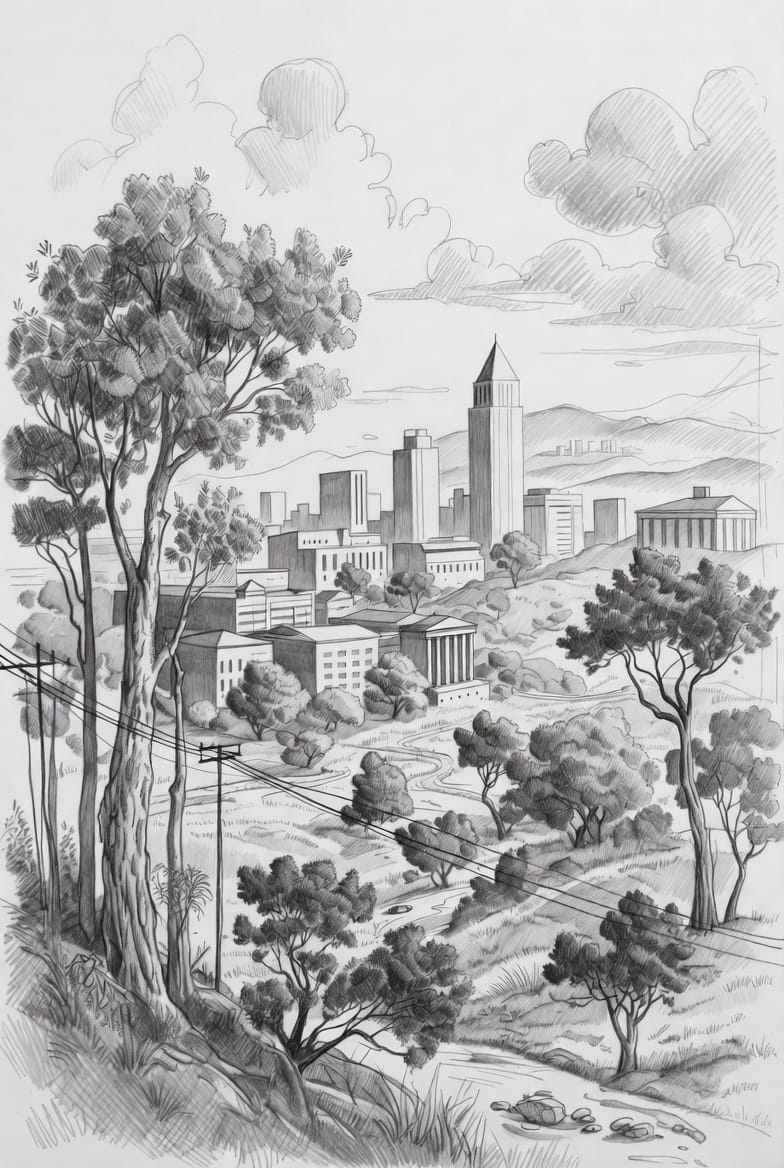
Climate change may be discussed globally, but its consequences unfold locally.
They appear in:
These are not abstract outcomes.
They are lived conditions.
Understanding how climate change touches everyday life helps transform it from a distant environmental issue into a shared human reality.
Biodiversity is the variety of life on Earth — plants, animals, insects, microorganisms, and the ecosystems that connect them.
It is not only about wildlife documentaries or distant rainforests. Biodiversity forms the living systems that pollinate crops, regulate climate, purify water, enrich soil, and sustain food webs.
As climate patterns shift, these living networks are being placed under growing strain.

Rising temperatures and shifting rainfall are forcing species out of their natural habitats, shrinking ecosystems and pushing wildlife into unfamiliar, unstable environments.
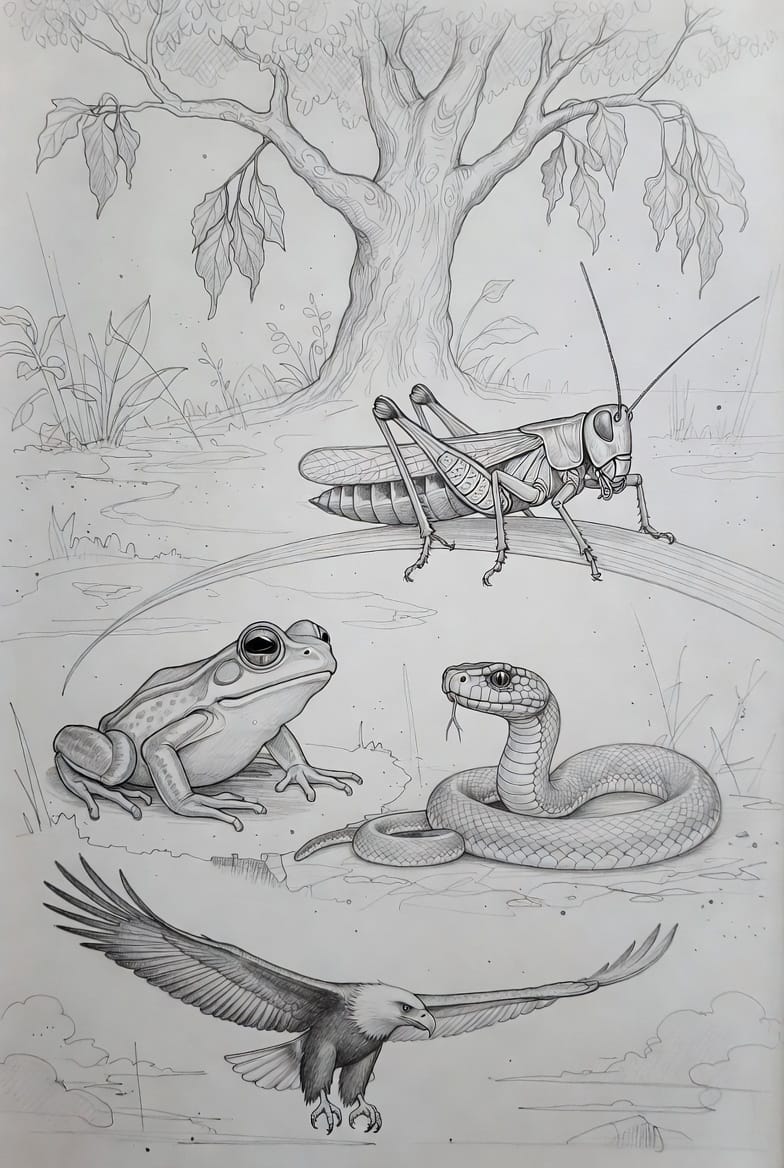
Climate shifts disturb flowering, breeding, and migration timing, breaking natural synchrony between plants, insects, animals, and food availability.
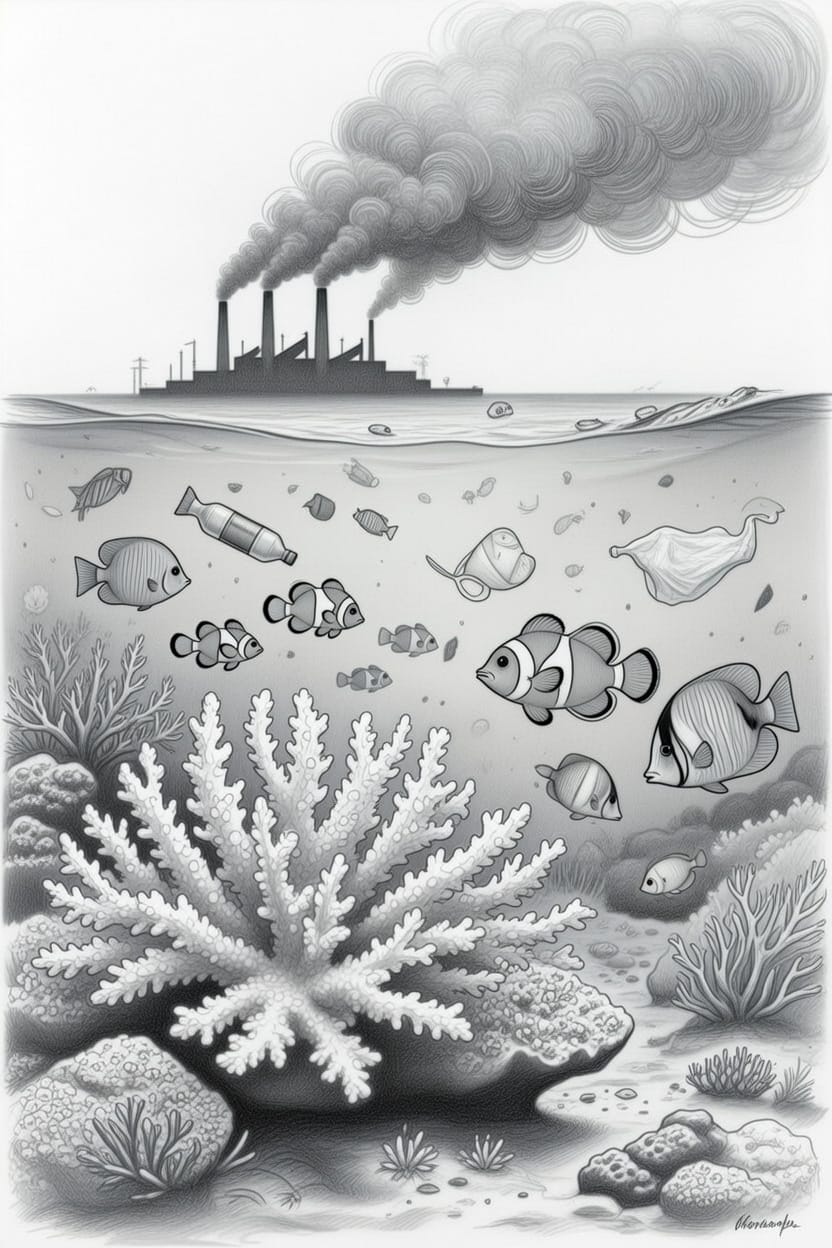
Warming and acidifying oceans are damaging coral reefs, altering fish populations, and weakening marine food webs that support global biodiversity.
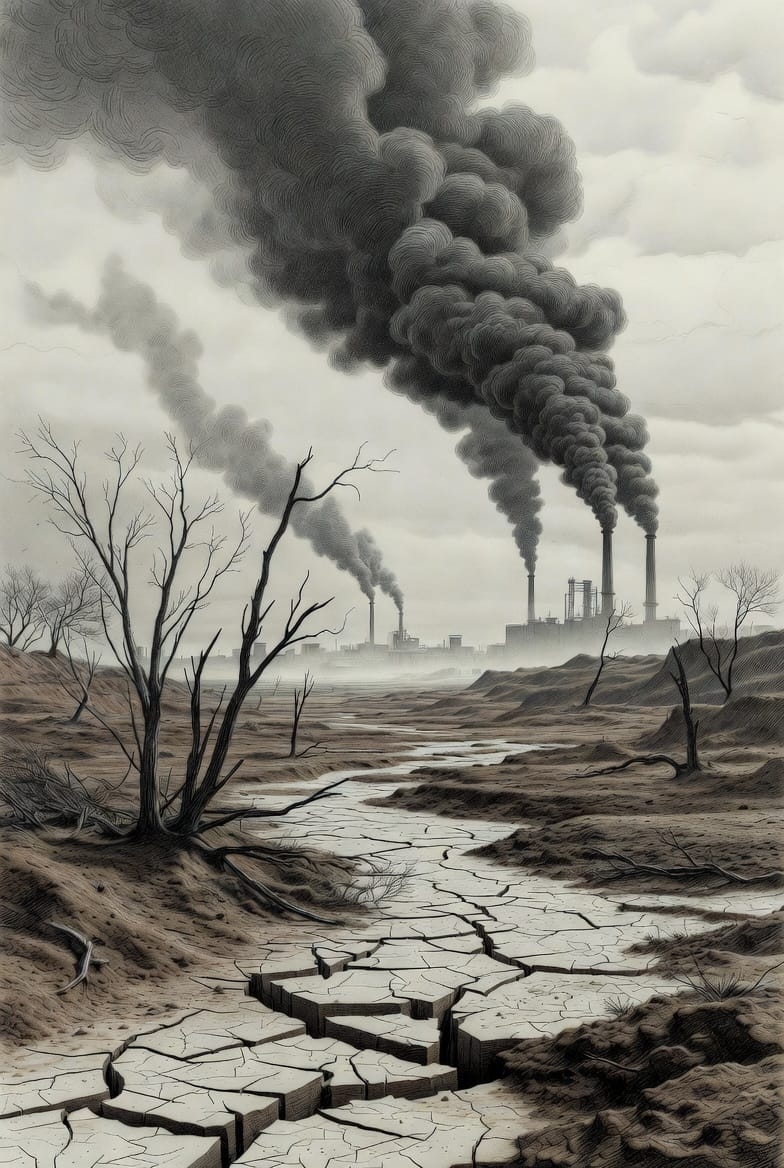
As species decline or relocate, ecosystems lose stability, making forests, wetlands, and oceans less resilient to disease, fires, and collapse.

Why biodiversity loss matters
Biodiversity supports food, water, climate regulation, and health; its decline weakens the natural systems human societies depend on.
Climate change is one of the most discussed topics in the world — and also one of the most misunderstood.
Misinformation, half-truths, and oversimplifications often blur what science is actually saying.
Let’s gently clear up some of the most common myths.
Earth does have natural climate cycles. But today’s rapid warming cannot be explained by natural factors alone.Scientific measurements show that the current rise in global temperatures closely matches the increase in greenhouse gases released by human activities — especially from burning fossil fuels and deforestation.Natural cycles still exist. They are no longer the dominant driver.
Climate change already influences food systems, water availability, health risks, housing stability, and local economies.Its effects show up differently in each region — but no place is completely isolated from changing climate conditions.Climate change is global. Its impacts are local.
Every fraction of a degree matters.The speed and scale of future impacts depend on what societies do now. Reducing emissions, protecting ecosystems, and adapting systems can still limit damage and protect communities.Climate change is not an on/off switch. It is a spectrum — and outcomes are shaped by choices.
Large systems drive most emissions — but those systems exist to meet human demand.Public behavior influences markets, policies, investment, and social priorities. Individual actions alone don’t solve climate change, but they help shape the systems that do.
No single habit changes the climate. But repeated actions across millions of people influence energy use, consumption patterns, waste levels, and political pressure.Cultural change has always preceded systemic change.Small actions don’t replace large solutions — they help create them.
Understanding climate change begins with separating what feels familiar from what science actually shows.
Clarity builds confidence.
And confidence supports better choices.
The honest answer is: climate change is not a single switch that can be turned off.
Some changes already set in motion — such as melting glaciers, rising sea levels, and ocean warming — will continue for decades, even if emissions were drastically reduced today.
But this does not mean the future is fixed.
Climate change is not one outcome.
It is a range of possible futures
And which path unfolds depends on what humanity does next.
What cannot be undone
Carbon dioxide stays in the atmosphere for a long time.
Oceans release heat slowly.
Large ice sheets respond gradually.
Because of this, some warming and environmental change is already locked in. Certain ecosystems will not fully return to what they once were.
This is not a reason for inaction.
It is a reason for urgency.
The speed, scale, and severity of climate impacts are not fixed.
Reducing greenhouse gas emissions can:
Every avoided ton of emissions lowers risk.
Every protected forest increases resilience.
Every system improved today shapes conditions tomorrow.

It shows up in the quiet places. In how long the lights stay on. In how much water flows without thought. In how often things are thrown away instead of used again. These small, repeated moments influence how much energy is produced, how much water is extracted, and how much waste the world has to absorb.

Climate change appears in the space between “want” and “need.” In how quickly items are replaced. In whether things are chosen to last or to be temporary. Every product carries a history of resources, transport, and emissions — including the often ignored hidden costs of plastic.
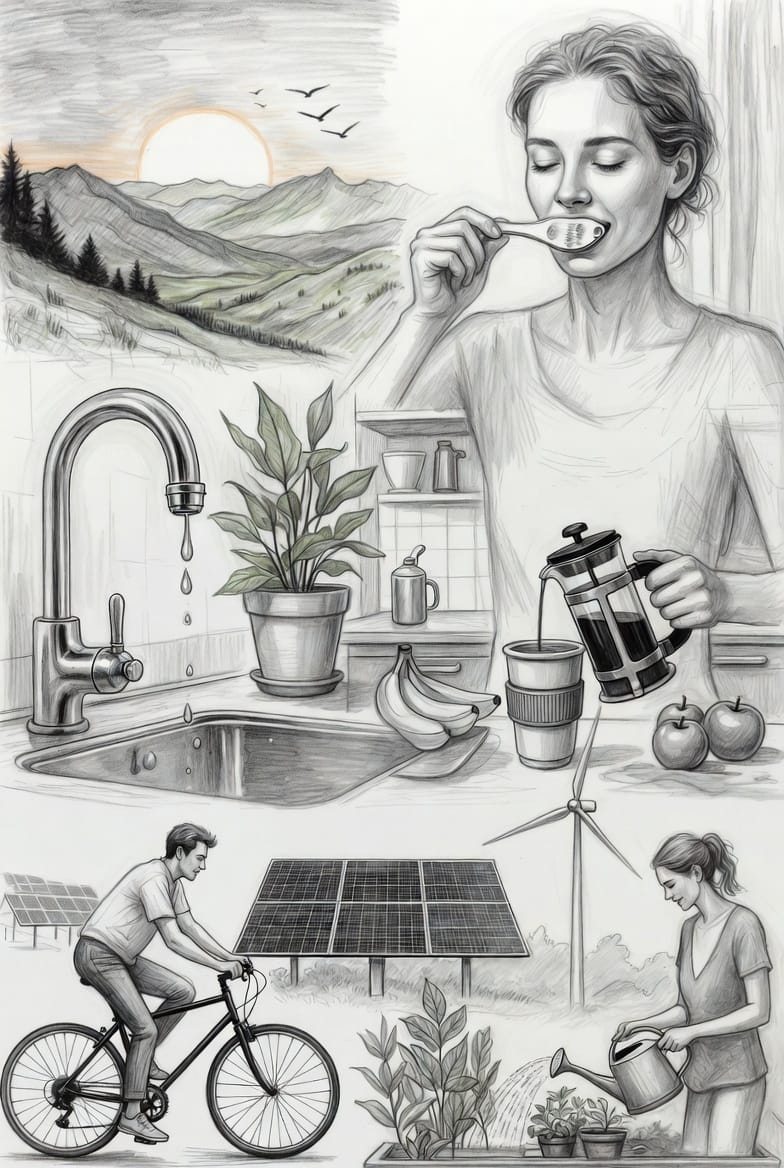
Food, travel, and habits quietly shape environmental pressure. What is eaten, wasted, reused, or valued influences farming systems, land use, and supply chains. Even small shifts, practiced widely, change what kind of systems grow.
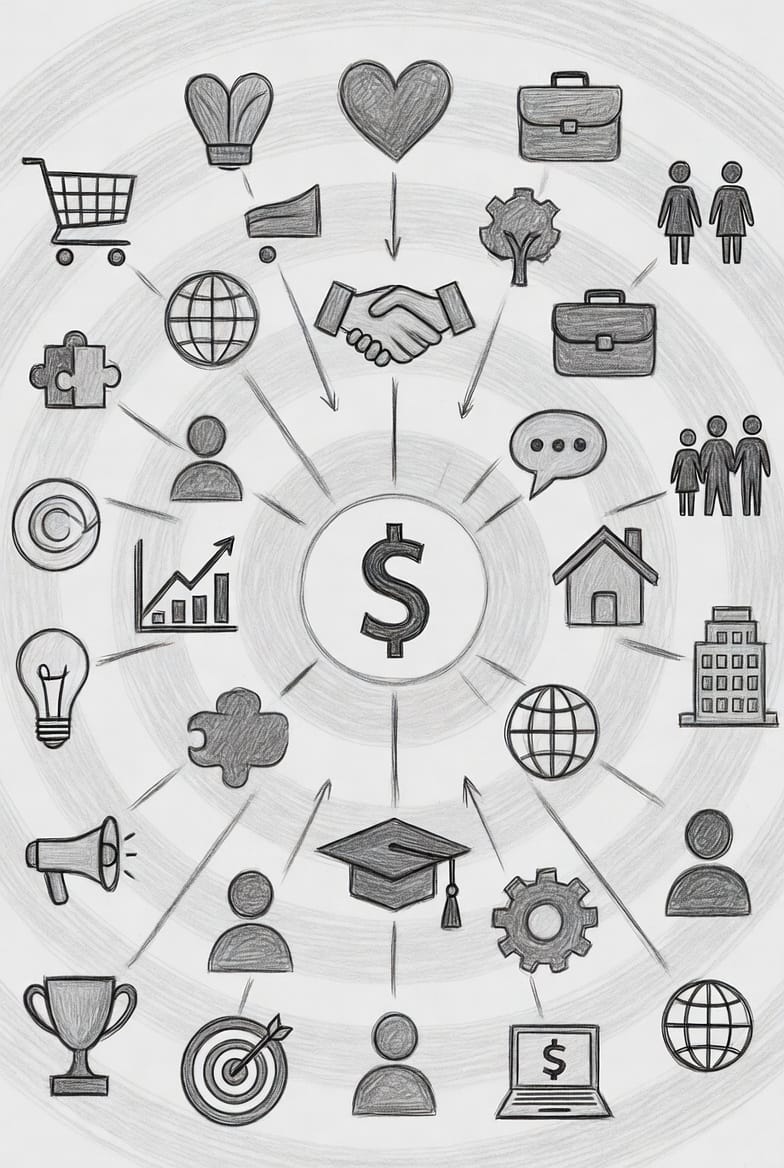
The invisible layer. What we talk about. What we support. What we normalize. What we question. Climate change is not guided only by policies and technologies, but by culture. By what societies decide is acceptable, important, or outdated.
No single action changes the climate.
But collective behavior changes what the world builds, funds, and protects.
And that transformation has always begun the same way — when everyday choices stop being automatic and start becoming conscious.
That is where eco-conscious living begins.
Climate change is often discussed in terms of global policies, carbon targets, and future scenarios. But it also lives much closer to home — in daily routines, personal values, and the quiet choices people make without thinking.
Eco-conscious living begins at that level — through eco-friendly habits that shape daily choices
It is not about perfection, sacrifice, or radical lifestyles.
It is about awareness.
Awareness of where energy comes from.
Awareness of how products are made.
Awareness of what happens after something is thrown away.
Awareness of how natural systems support everyday life.
When awareness grows, choices change. And when choices change at scale, the systems that serve them begin to change as well.
Eco-conscious living does not claim to “solve” climate change on its own. What it does is shape the cultural foundation on which larger climate solutions become possible.
It influences what people demand.
What markets reward.
What policies gain support.
What innovations are prioritized.
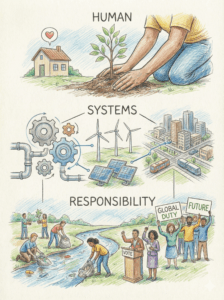
Climate change is driven by human systems.
Eco-conscious living is how societies begin to reshape them.
By understanding climate change and its real-world impacts, people are better equipped to participate — not only as consumers, but as citizens, community members, and stewards of the environments they live within.
Climate awareness is not the end of the journey.
It is the beginning of a more informed one.
Climate change is often presented as something distant — either too technical to understand or too overwhelming to face. But in reality, it is neither.
It is a long-term transformation of the natural systems that support life on Earth. And it is unfolding within the same world people live in every day.
Understanding climate change does not require fear.
It requires clarity.
Clarity about what is happening.
Clarity about why it is happening.
Clarity about how it touches everyday life.
Clarity about where human choices fit.
Being informed does not mean carrying the weight of the planet alone. It means recognizing that individual lives exist inside larger systems — and that systems respond to collective awareness, values, and direction.
No single person controls the climate.
But societies shape the conditions that guide it.
To be involved is not to be perfect.
It is to be conscious.
Conscious of impact.
Conscious of connection.
Conscious of the role everyday choices play in a shared future.
Climate change is not only an environmental issue.
It is a human one.
And it will be shaped not only by science and policy — but by how people understand the world they are part of.
That understanding is where meaningful change begins.
This guide is based on a careful review of leading climate science institutions and environmental research organizations. Our goal was to ensure that the information shared here reflects current scientific understanding, real-world observations, and responsible environmental reporting.
Key sources consulted
Information and scientific grounding for this guide were drawn from established authorities, including:
Where factual, scientific, or statistical statements are made, we link directly to the original source material whenever possible.
Climate change refers to long-term shifts in Earth’s climate patterns, including temperature, rainfall, winds, and ecosystems.
Global warming is one part of climate change — specifically the ongoing rise in Earth’s average temperature due to heat-trapping gases released by human activities.
Climate change today is primarily caused by human activities, especially the burning of fossil fuels, deforestation, industrial production, and large-scale agriculture.
These activities release greenhouse gases that trap heat in the atmosphere and disrupt Earth’s natural climate balance.
Climate change affects rising temperatures, extreme weather, melting ice, sea-level rise, water availability, food systems, biodiversity loss, and human health.
Its impacts are global, but they appear differently in each region and community.
Climate change influences food prices, water availability, heat exposure, air quality, housing stability, and disaster risks.
It increasingly shapes the environmental conditions people live and work within.
Climate change disrupts habitats, shifts migration patterns, alters breeding cycles, and weakens ecosystems.
Many species struggle to adapt quickly enough, increasing extinction risk and reducing ecosystem stability.
Climate change adaptation means adjusting how societies live, build, and manage resources to reduce harm from climate impacts.
This includes climate-resilient agriculture, water management, coastal protection, heat-safe cities, and ecosystem restoration.
Climate change activism involves raising awareness, influencing policy, supporting environmental protection, and pushing institutions to reduce emissions and protect ecosystems.
Individuals influence climate change through energy use, consumption patterns, waste generation, food choices, and social influence.
Many major energy companies now invest in renewable energy, efficiency technologies, carbon reduction strategies, and climate commitments.
However, global climate progress depends on how quickly energy systems transition away from fossil fuels and toward low-carbon solutions.

Eco-conscious living isn't about perfection or overnight transformation. It's about showing up with curiosity, learning as you go, and finding your own authentic path toward a more intentional life.
Join a community of thoughtful individuals who are exploring what it means to live in harmony with Earth—one choice, one reflection, one small step at a time.