
Designing Low-Impact Home Systems
As you noticed your home’s systems and the rooms that shape them,
a quiet realization may have emerged:
Your home influences your behavior more than you realize.
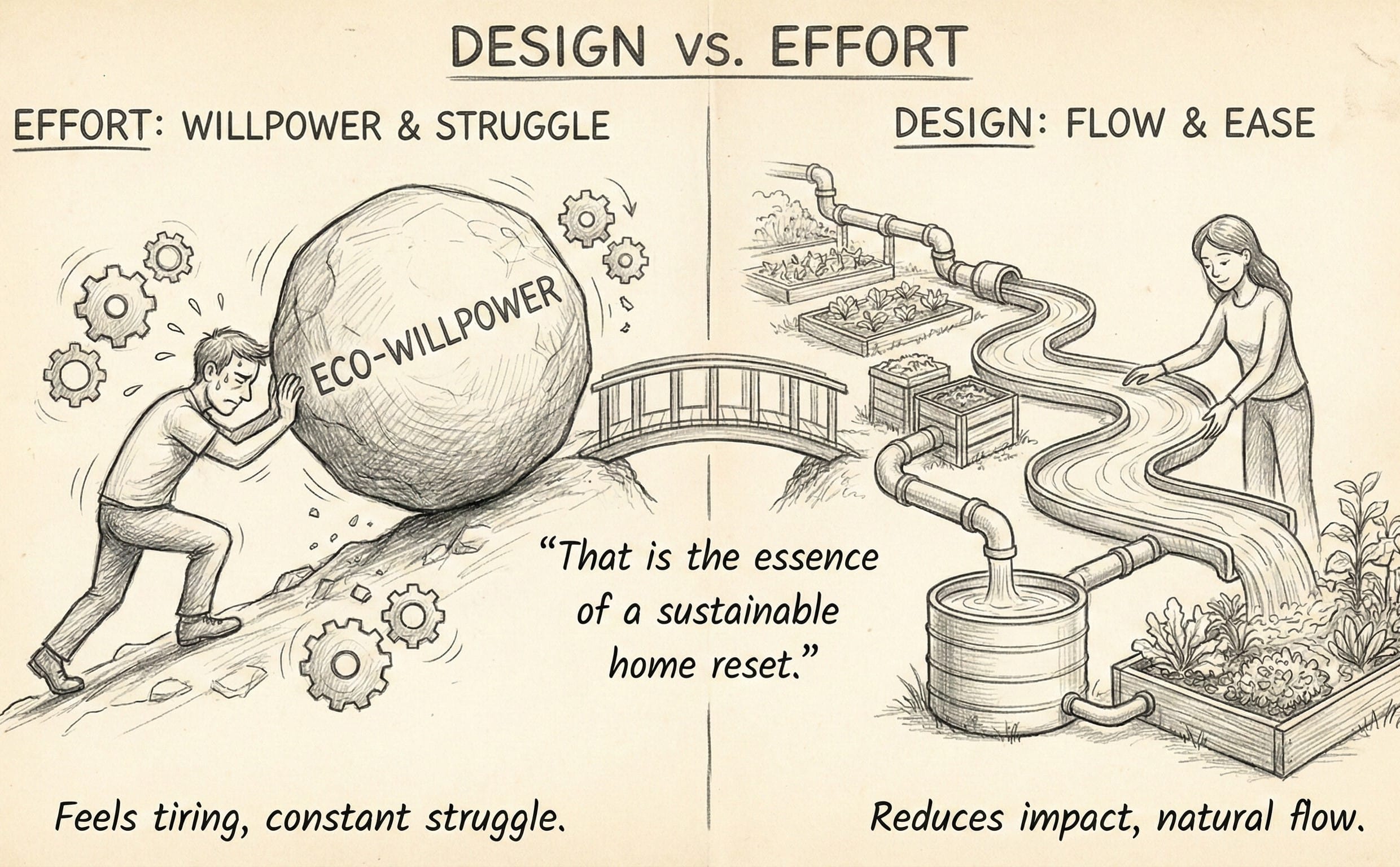
And that means sustainable living does not begin with effort.
It begins with design.
What “Low-Impact” Really Means
Low-impact living at home is not about doing more.
It is about arranging your space so that sustainable choices feel natural, easy, and supportive.
When systems are designed well, you don’t need to rely on motivation.
Your environment does the work for you.
What Design Looks Like in Everyday Life
Design is not complicated.
It looks like small shifts in where things are placed.
• Keep a reusable bottle where you usually sit
• Place waste bins where waste is actually created
• Keep cloth bags near the door
• Store cleaning items where you use them
• Keep switches and plugs easy to access
When things are easy, they happen naturally.
Example: When Design Makes Change Effortless
If your waste bins are hidden,
you have to remember to sort.
But if they are placed where waste is created,
sorting becomes automatic.
The environment supports the behavior.
Not your willpower.
Create Your First Low-Impact System
Choose one daily action:
• Drinking water
• Throwing waste
• Using electricity
Ask yourself:
How can I make the better choice easier?
Adjust your space slightly.
That is your first system.