
- Takes only 2 minutes — just 5 questions
- Personalized eco action plan, not generic advice
- 100% free & beginner friendly
- Start reducing your kitchen footprint today
✓ Free forever ✓ No email required ✓ Science-backed tips
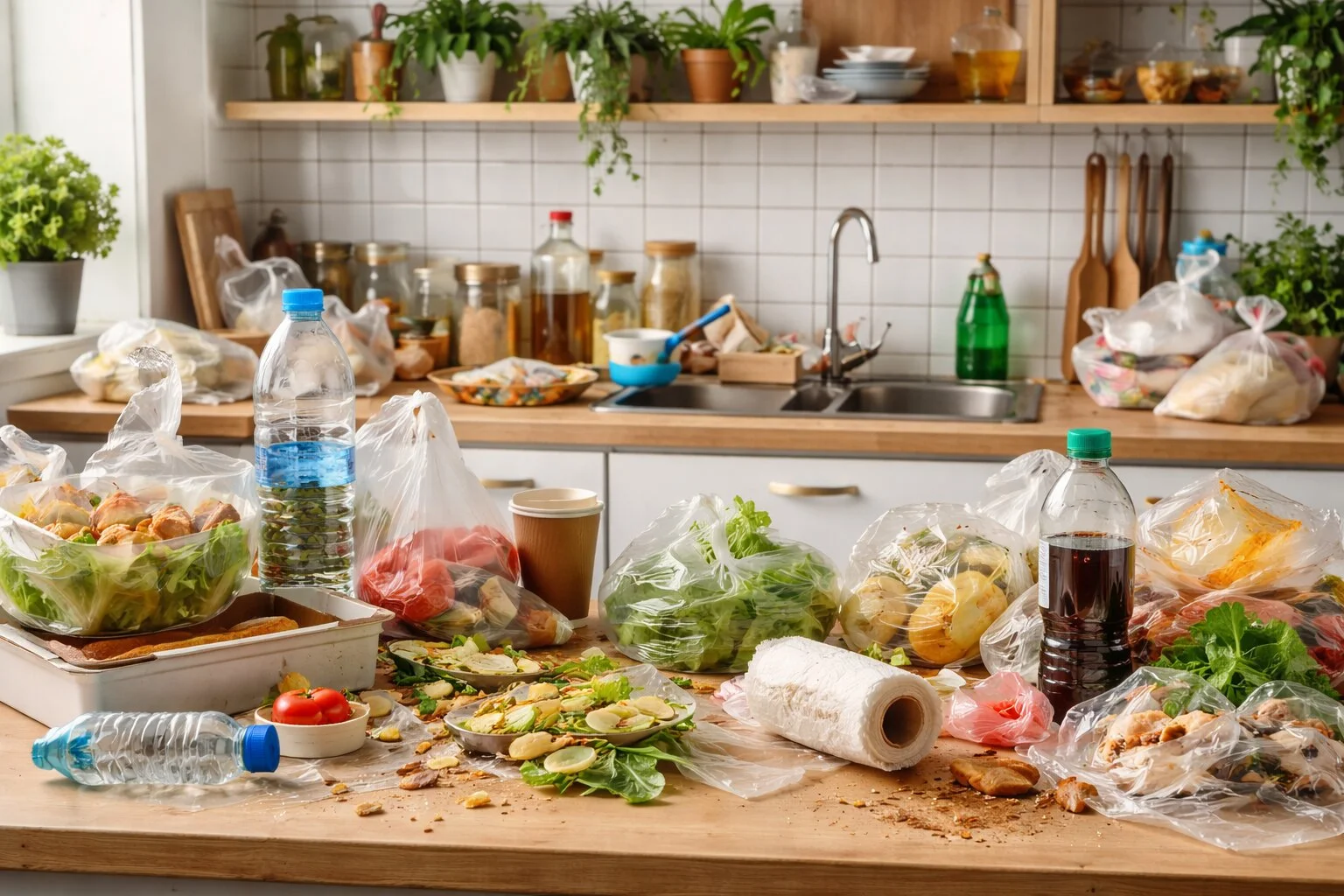
30–40%
of purchased food wasted per household weekly
8M
tonnes of plastic enter oceans from kitchens yearly
2min
to find your biggest kitchen eco impact area
7-Day
personalized improvement plan
Eco Friendly Kitchen Tips
Your kitchen doesn’t need a complete overhaul to become eco friendly.
Small changes in food storage, meal planning, cleaning habits, and plastic usage can significantly reduce your kitchen’s environmental impact.
This quiz helps you discover which eco friendly kitchen tips apply most to your lifestyle, so you can start with the highest impact changes first.
Most People Don't Know How to Reduce Household Food Waste — Because They're Looking in the Wrong Place
The average household loses hundreds of pounds of food and generates enormous amounts of single-use plastic every year from four silent daily habits. Which one is yours?
Food Waste Habit
Throwing away food without realising it. Forgotten leftovers, overripe produce, and impulse buys that never get eaten all silently inflate your kitchen footprint.

Plastic Overload
Hidden single-use plastics in daily kitchen routines — cling wrap, zip bags, plastic-bottled cleaners that quietly pile up in landfill every week.
Chemical Cleaning
Using harsh cleaners without eco alternatives. Many conventional kitchen products release volatile compounds and pollute waterways after every wash.

Overbuying Groceries
Buying more than the household can consume. Without a meal plan, most families consistently buy 20–30% more food than they actually need.
3 Steps to a More Eco Friendly Kitchen
No overwhelm. No jargon. Just one clear starting point and simple changes you can act on today.
-
1. Answer 5 Quick Questions
Tell us about your current kitchen habits. Honest answers = a more accurate eco action plan. Takes under 2 minutes.
-
2. We Find Your Biggest Impact Area
Our algorithm identifies which of the 4 kitchen habits is costing you the most environmental impact and why it happens.
-
3. Get Your Personalised Eco Plan
Receive 3 simple eco fixes and a 7-day improvement plan tailored to your kitchen footprint. Start today, not someday.
Example Result
Your Weak Area:
Planning & Food Waste
Here's how you can start to reduce food waste at home this week:
Plan meals weekly before you shop — saves avg. £30/month on wasted food
Check your pantry and fridge before every grocery run
Use FIFO (First In, First Out) storage for perishables
Batch-cook grains on Sundays to reduce impulse cooking waste
More Than a Quiz: A Real Eco Kitchen Action Plan
Your kitchen's biggest impact area
Pinpointed from 4 common habits so you fix the right thing first.
Why it happens in your household
Understanding the root cause makes change stick.
3 simple eco fixes you can start today
No expensive swaps, no lifestyle overhaul small shifts, real results.
A personalized 7-day eco improvement plan
Step by step, day by day turning eco intentions into everyday actions.
One Clear Focus Area
Information overload is why most eco intentions never become actions. We give you one improvement area the highest-impact place to start so you actually begin.
Built on Real Kitchen Science
Every tip is grounded in household sustainability research. No trendy gimmicks — only changes proven to reduce your kitchen footprint meaningfully.
Beginner-Friendly by Design
You don’t need a zero-waste lifestyle to start. Our eco fixes meet you where you are and scale with your confidence — one small habit at a time.
Real Kitchens, Real Changes
"I thought I was already eco-friendly, but the quiz showed I was wasting 40% more food than I realised. The 7-day plan was genuinely life-changing."
"I finally understand how to reduce household food waste without completely overhauling my routine. The meal planning tips alone saved us ₹2,000 this month."
"Super quick, super useful. I expected generic advice but got specific fixes for MY kitchen. The plastic section was an eye-opener — we've already cut our plastic use by half."
Everything You're Wondering About
To make your kitchen eco friendly, focus on reducing waste, minimizing plastic use, and choosing sustainable cleaning and storage options. Switching to reusable containers, planning meals, and using natural cleaning alternatives are great starting points.
You can also bring sustainability into your kitchen by adding plants.
Find your kitchen plant to discover the best options for your space.
Yes — completely free, no credit card, no email required. You get your full personalized eco action plan the moment you complete the 5 questions.
Reducing food waste at home starts with simple habits like planning your meals, checking your pantry before shopping, and storing food properly. Small changes such as using leftovers creatively and avoiding impulse buying can significantly cut down waste.
This Eco Kitchen Quiz helps you identify exactly where your food waste is coming from and gives you a personalized plan to reduce it effectively.
Reducing household food waste involves better meal planning, proper storage, and mindful purchasing. Simple steps like organizing your fridge, using older ingredients first, and buying only what you need can make a big difference.
The quiz helps you pinpoint your biggest food waste habits and provides easy steps to fix them.
Eco friendly kitchen tips for beginners include reducing single-use plastics, avoiding food waste, using reusable items, and choosing natural cleaning products. Starting with small, manageable changes makes sustainable living easier and more consistent.
This quiz is designed to give beginners a clear and simple starting point based on their lifestyle.
The quiz accounts for your time constraints. If you’re time-poor, we focus on the highest-impact, lowest-effort changes — like pantry organisation, shopping list habits, and simple storage swaps that prevent waste automatically.
Your kitchen footprint is the combined environmental impact of your food purchasing, waste, packaging use, and cleaning habits. It covers carbon emissions from food waste, plastic pollution, water usage, and chemical runoff — all the ways your kitchen affects the planet beyond just energy bills.
You can reduce plastic use in your kitchen by switching to glass or steel containers, avoiding packaged foods, and using reusable bags. Even small swaps can significantly reduce waste.
The quiz helps you discover hidden plastic habits in your kitchen routine
Food waste often happens due to poor meal planning, overbuying groceries, and improper storage. Many people are unaware of these habits.
This quiz identifies your specific food waste patterns and helps you fix them easily.
Proper food storage includes keeping fruits and vegetables in the right conditions, labeling leftovers, and using airtight containers. This helps extend shelf life and reduce spoilage.
Your personalized plan will include storage improvements based on your habits.
The biggest causes of kitchen waste include overbuying groceries, poor planning, food spoilage, and excessive plastic use.
The quiz breaks down which of these factors is impacting your kitchen the most.
You can make your kitchen more sustainable by improving planning, reducing waste, reusing items, and avoiding unnecessary purchases. Many eco-friendly changes don’t require spending money.
This quiz focuses on practical, no-cost improvements you can start immediately.
Simple ways include planning meals, using leftovers, composting organic waste, and avoiding single-use items. Consistency in small habits leads to big impact.
The quiz gives you daily actions tailored to your lifestyle.
Meal planning helps you buy only what you need and use ingredients efficiently, reducing the chances of food going bad.
The quiz evaluates your planning habits and suggests better systems to reduce waste
The easiest way is to focus on one area first — like reducing food waste or plastic use — instead of trying to change everything at once.
This quiz helps you identify your highest-impact starting point.
You can start seeing improvements in just a few days by changing small habits. Long-term sustainability comes from consistent actions over time.
The quiz gives you a 7-day action plan to get started quickly.
Not at all, eco friendly kitchens can actually save money by reducing waste, avoiding unnecessary purchases, and improving efficiency.
This quiz focuses on cost-saving sustainable habits.
Ready to Discover Your Kitchen's True Impact?
Take the Eco Kitchen Quiz — 5 questions, 2 minutes — and get a free personalized plan to make your kitchen eco friendly starting today.
Check My Kitchen Footprint🌿 Free forever ⏱️ 2 minutes 📋 Personalized result 🔒 No sign-up needed