Menu
The environment refers to everything around us that supports life on Earth, including air, water, land, plants, animals, and natural ecosystems. It plays a vital role in maintaining balance, providing resources, and sustaining all living organisms.
The air you breathe, the water you drink, and the weather you feel—that is the environment. It surrounds and sustains us, yet human activities continue to threaten its balance.
The environment is the foundation of life on Earth. It includes air, water, land, and ecosystems that support all living organisms. As human activities continue to impact the planet Understanding its significance and adopting eco-friendly habits have never been more critical.
This article explores what is the environment , why it matters, the dangers it faces, and practical ways to protect it. By the end, you’ll discover how small, conscious actions can make a massive difference in preserving our planet.
What Is The Environment
The environment refers to everything around us that supports life on Earth, including air, water, land, plants, animals, and natural ecosystems. Together, these elements interact to maintain balance and make life possible for all living organisms.
Water
Hydrosphere
about 2.5% is freshwater, and of that, a mere 0.014% is both fresh and easily accessible for human use.
Air
Atmosphere
The atmosphere shields us from harmful solar radiation and regulates climate.
Earth
Lithosphere
The atmosphere shields us from harmful solar radiation and regulates climate.
Living Organisms
Biosphere
The biosphere includes all living beings. Biodiversity maintains ecological balance
Understanding what the environment is helps us make better everyday choices, which is why adopting an eco-friendly living approach is essential for protecting natural systems and maintaining balance.
Importance of the Environment: Why It Matters for Our Survival
The environment is the very essence of life—a complex, intricate web of interconnected systems that sustains every living being on Earth.
Think of a morning when there’s no clean air, no fresh water, and no fertile land left to sustain us. It’s not just a distant, dystopian possibility—it’s a reality we could face sooner than we think if we don’t prioritize protecting our planet.
The environment is the ultimate provider, giving us the air we breathe, the water we drink, and the food we eat. It’s the source of every resource we rely on, from the wood that builds our homes to the energy that powers our lives. Without a healthy environment, life as we know it would simply cease to exist.
Biodiversity is another cornerstone of a healthy environment. Picture a lush, dense forest teeming with life—birds chirping, insects pollinating flowers, and decomposers like fungi breaking down fallen leaves to enrich the soil. Every species, no matter how small, plays a vital role in maintaining the balance of ecosystems.
Bees, for instance, are tiny but mighty pollinators responsible for one-third of the food we eat. Microorganisms in the soil work silently to keep it fertile, ensuring we can grow crops to feed billions.
But when biodiversity is lost—due to habitat destruction, pollution, or climate change—ecosystems collapse, and the ripple effects can be catastrophic.
Protecting the environment means preserving this incredible diversity of life, ensuring that every species can thrive and contribute to the planet’s resilience.
At its core, the environment sustains all that matters to us. It sustains life, regulates the climate, supports biodiversity, and enhances our well-being. Yet, it’s under threat like never before.
But the good news is we have the power to make a difference.
By adopting eco-friendly habits—like reducing waste, conserving energy, and supporting sustainable practices—we can protect the environment.
By joining conservation efforts and spreading awareness, we can inspire others to take action.
Together, we have the power to preserve our planet for future generations. After all, a healthy environment isn’t just a gift—it’s a responsibility we all share. Let’s act now, before it’s too late.
Major Threats to the Environment
Pollution
Pollution contaminates air, water, and soil, harming human health, wildlife, and natural ecosystems.
Deforestation
Deforestation destroys habitats, reduces biodiversity, and accelerates climate change by increasing carbon emissions.
Climate Change
Climate change disrupts weather patterns, intensifies natural disasters, and threatens food and water security worldwide.
Over Consumption
Overconsumption depletes natural resources faster than they can regenerate, putting long-term environmental sustainability at risk.
Benefits of Being Eco-Friendly: How Sustainable Living Protects the Environment
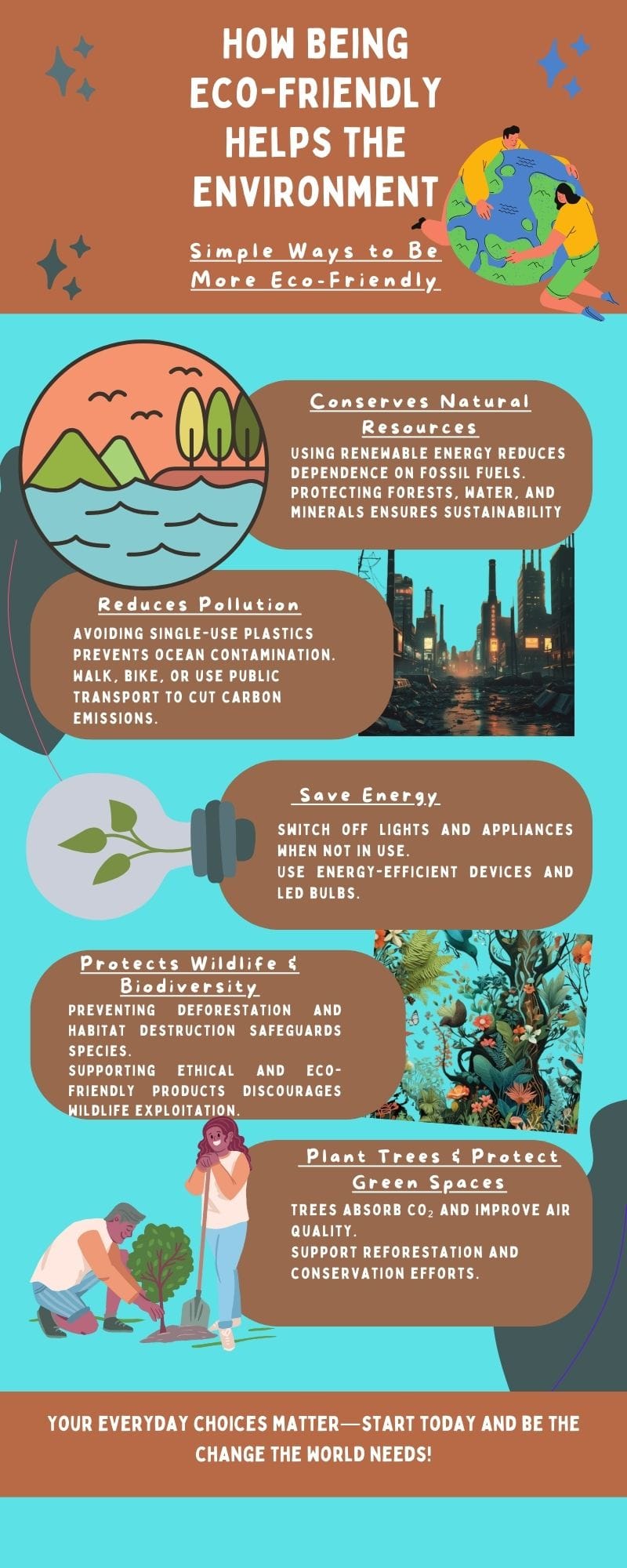
For practical actions you can start today, explore our 25 sustainable living tips designed for everyday life.
At Earthlyours, we aim to simplify environmental concepts using research-backed information and real-world examples, helping readers understand and protect the environment through informed choices.
Conclusion
The environment is not just a backdrop to our lives — it is the very foundation of our survival and well-being. By protecting the air we breathe, the water we drink, the land we live on, and the biodiversity around us, we safeguard our future. Every individual action, no matter how small, contributes to a larger global effort. Whether it’s conserving water, reducing plastic use, planting trees, or choosing sustainable habits, your choices today can help restore balance to our planet. Together, we have the power to create a healthier, greener Earth for ourselves and for generations yet to come.
Your everyday choices matter—start today and be the change the world needs!
FAQs
What is the environment?
The environment includes all living and non-living elements that interact in nature, such as air, water, land, and ecosystems.
Why is the environment important?
It provides oxygen, water, food, and natural resources, making life possible.
How can I help protect the environment?
By reducing waste, conserving energy, using eco-friendly products, and minimizing carbon emissions.
What are the benefits of sustainable living?
It reduces pollution, conserves nature, protects wildlife, and improves human health.
What’s the best way to combat climate change?
Support clean energy, reduce carbon footprint, and plant trees to absorb CO₂.